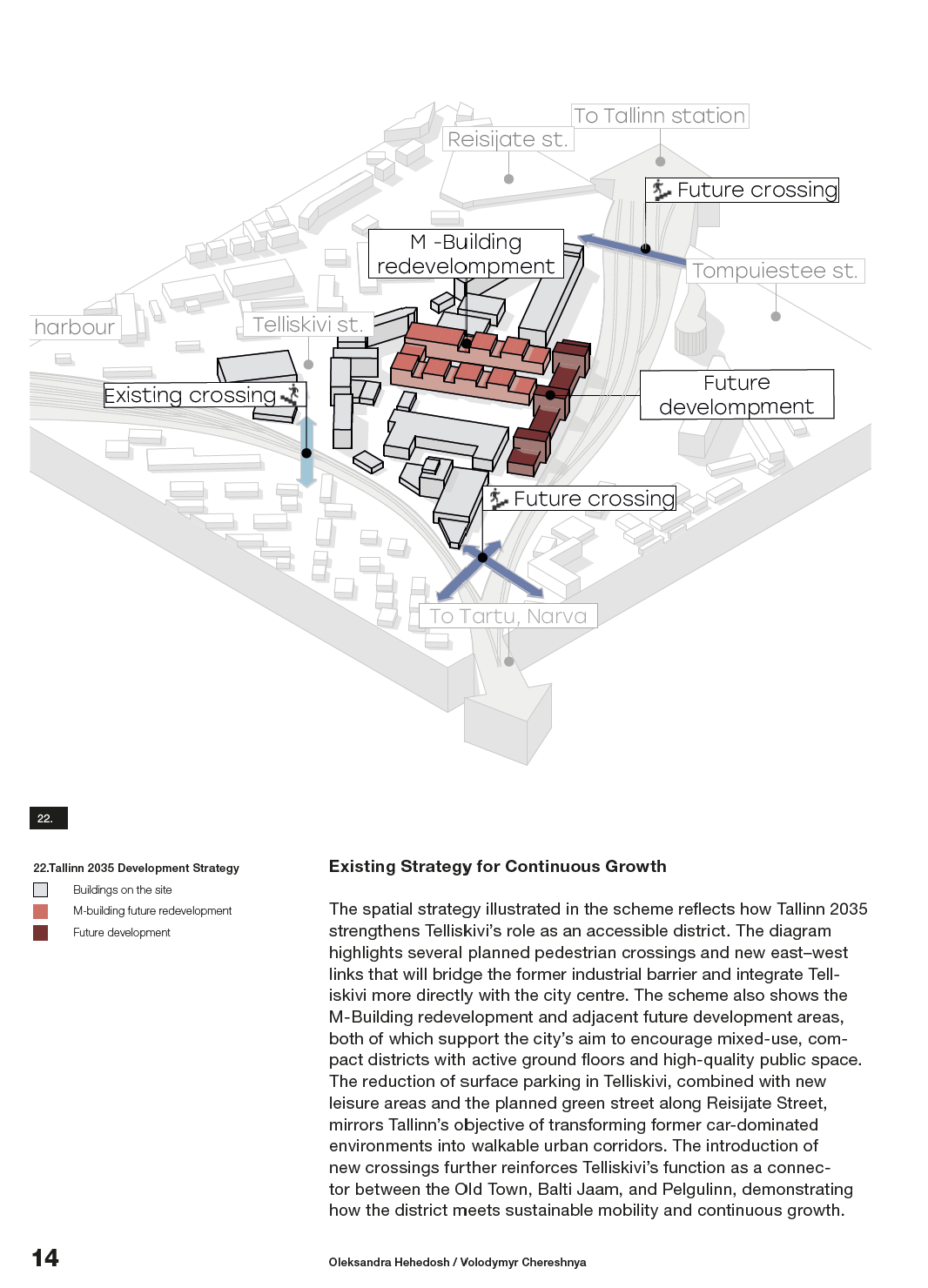
Telliskivi as an Urban Model of Continuous Transformation
Oleksandra Hehedosh, Volodymyr Chereshnya
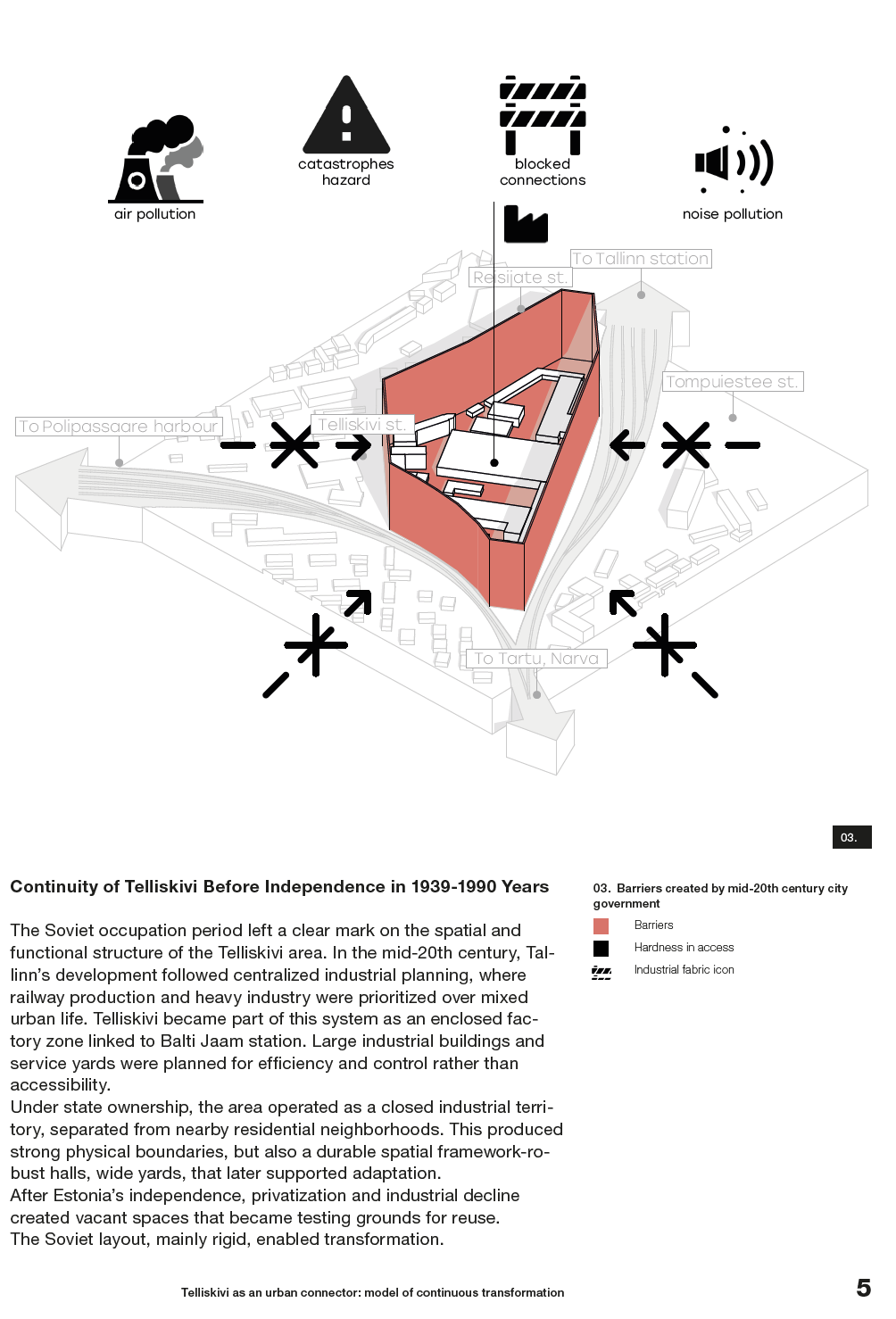
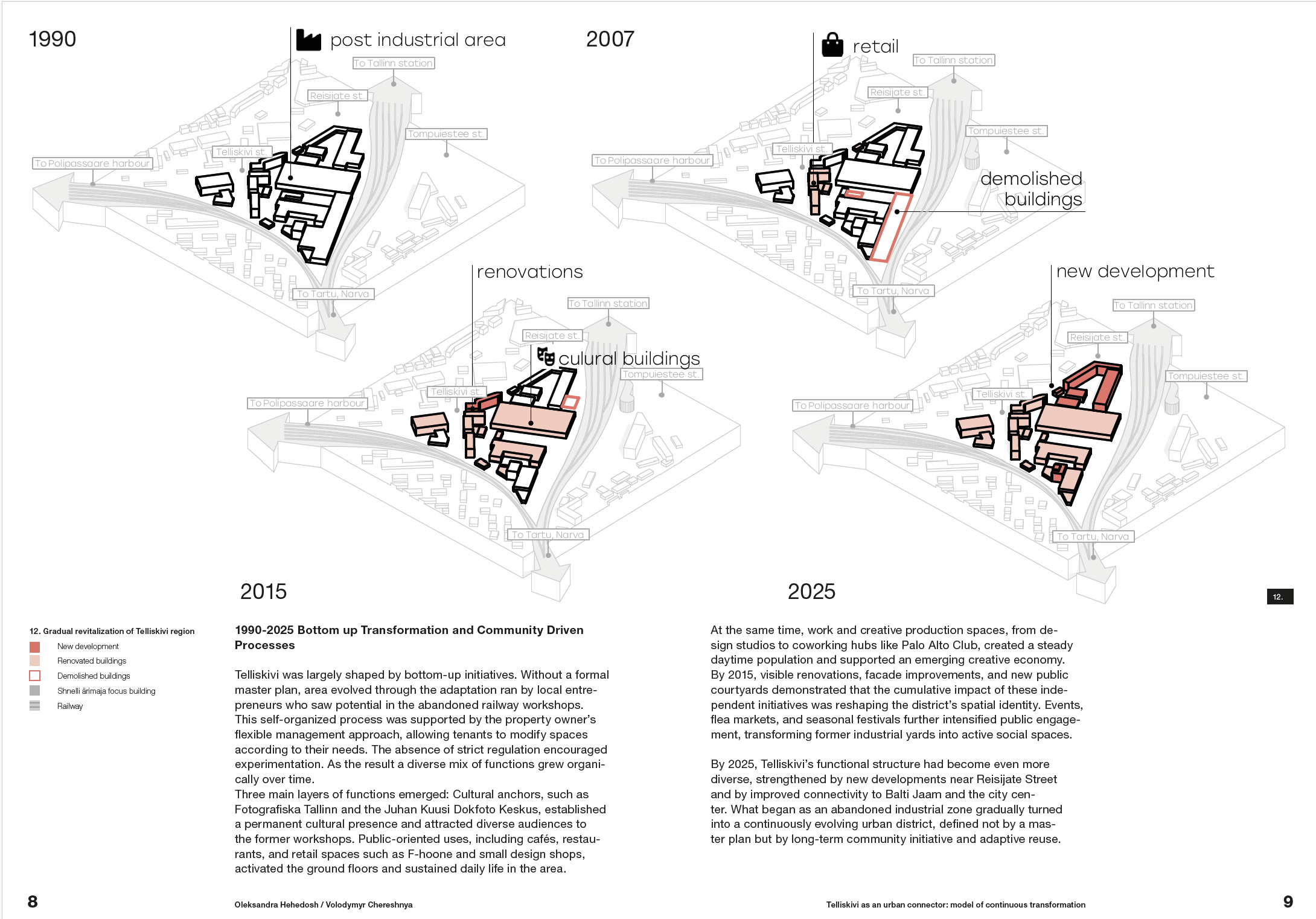
The research examines Telliskivi’s transformation from a former railway-industrial area into Tallinn’s creative hub. Bottom-up initiatives and informal uses gradually reactivated abandoned industrial buildings, while improved pedestrian connections and city strategies reinforced urban integration. Cultural anchors, public-oriented spaces, and creative workspaces established a diverse, everyday rhythm of social and economic activity. Former industrial yards and parking areas evolved into pedestrian zones, event spaces, and leisure areas, strengthening spatial continuity. Today, Telliskivi hosts a dense ecosystem of cultural institutions, studios, cafés, and public spaces. Its atmosphere of openness and experimentation emerges from the interplay of heritage structures, community initiatives, and social dynamics, demonstrating how post-industrial districts can evolve organically into connected, resilient, and human-centered urban environments.
Tallinn Port: Tourism’s Influence on Function and Morphology
Liliana Mishchenko, Viktoriia Shepel
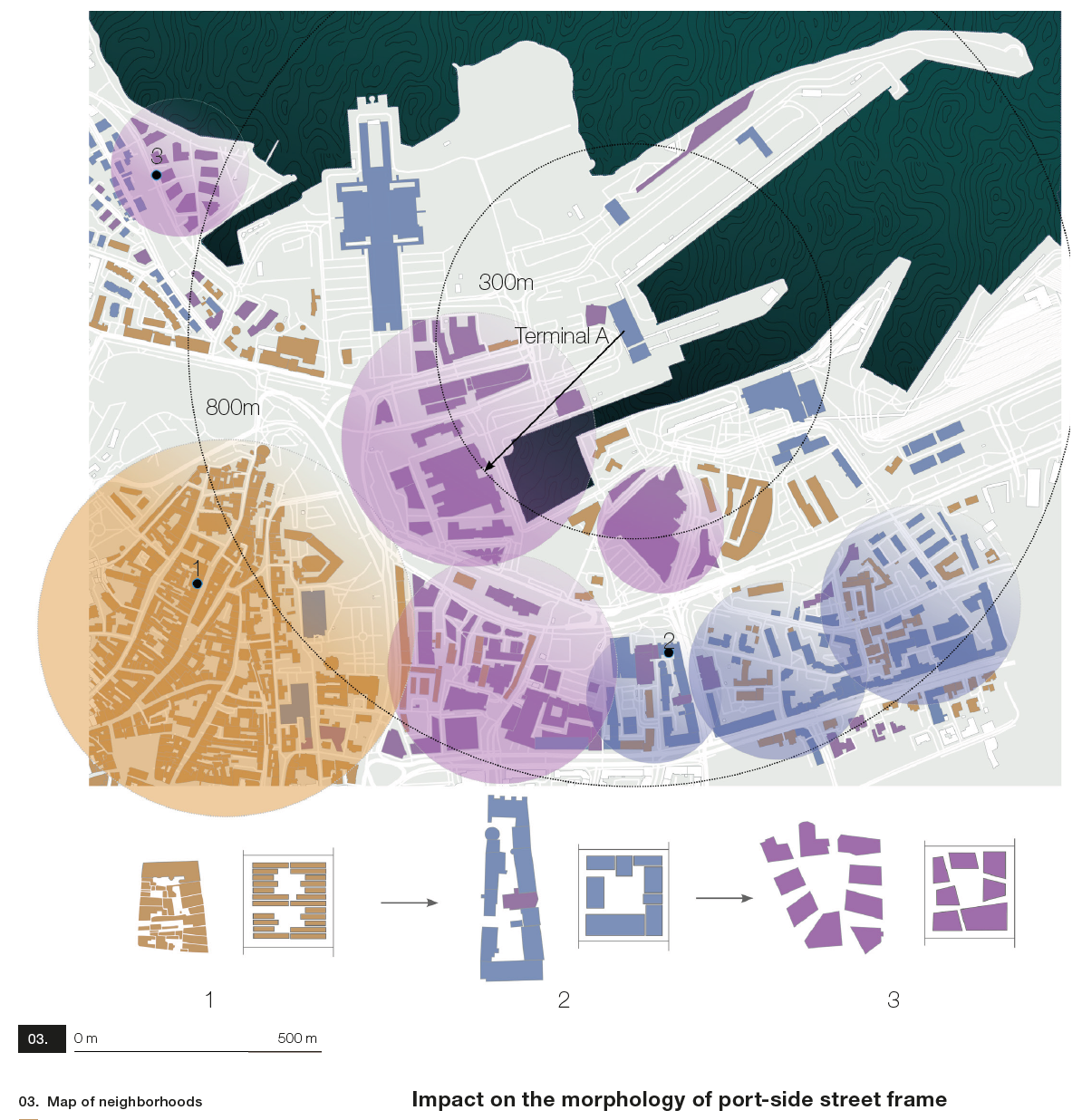
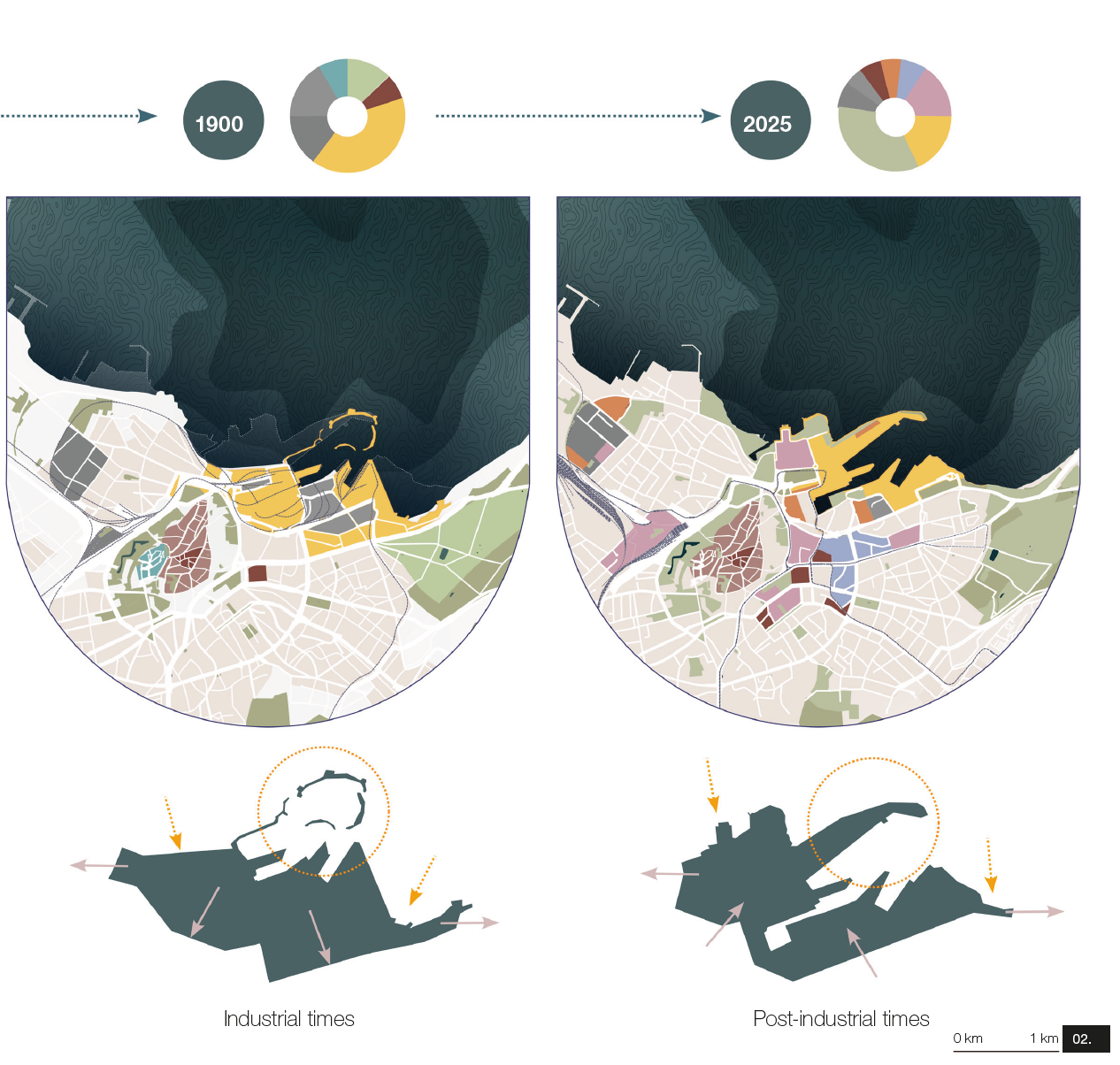
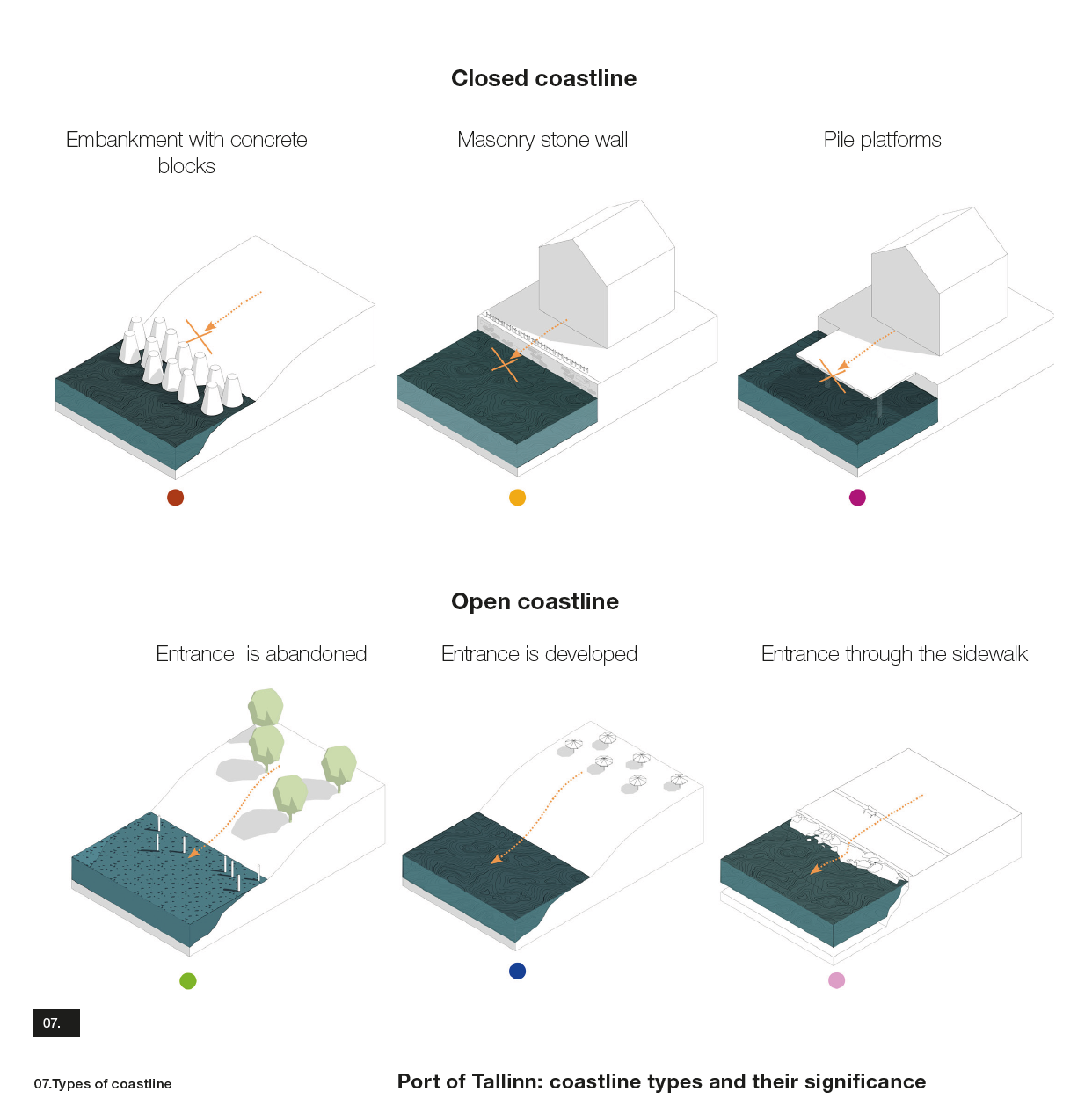
The study examines the transformation of Tallinn Port from an industrial hub into a multi-functional, tourism-oriented urban node. Tourism has driven the repurposing of former industrial areas into promenades, public squares, leisure spaces, and passenger infrastructure, reshaping the port’s morphology at multiple scales. Street patterns, building clusters, and waterfront spaces were adapted to improve accessibility, circulation, and engagement with both residents and visitors. Green areas within the port increased, while surrounding urban greenery declined due to densification. Courtyards and structural layouts often follow triangular or trapezoidal geometries, facilitating diagonal movement and continuous flows of people. Today, Tallinn Port functions as an open, integrated, and visually engaging urban interface, demonstrating how tourism can drive adaptive reuse, spatial reconfiguration, and the creation of vibrant coastal urban spaces.
Life in the Web of Transformation: The Impact of Overtourism on the Local Community in Tallinn’s Old Town
Oryna Babentsova, Oleksandra Kushnir
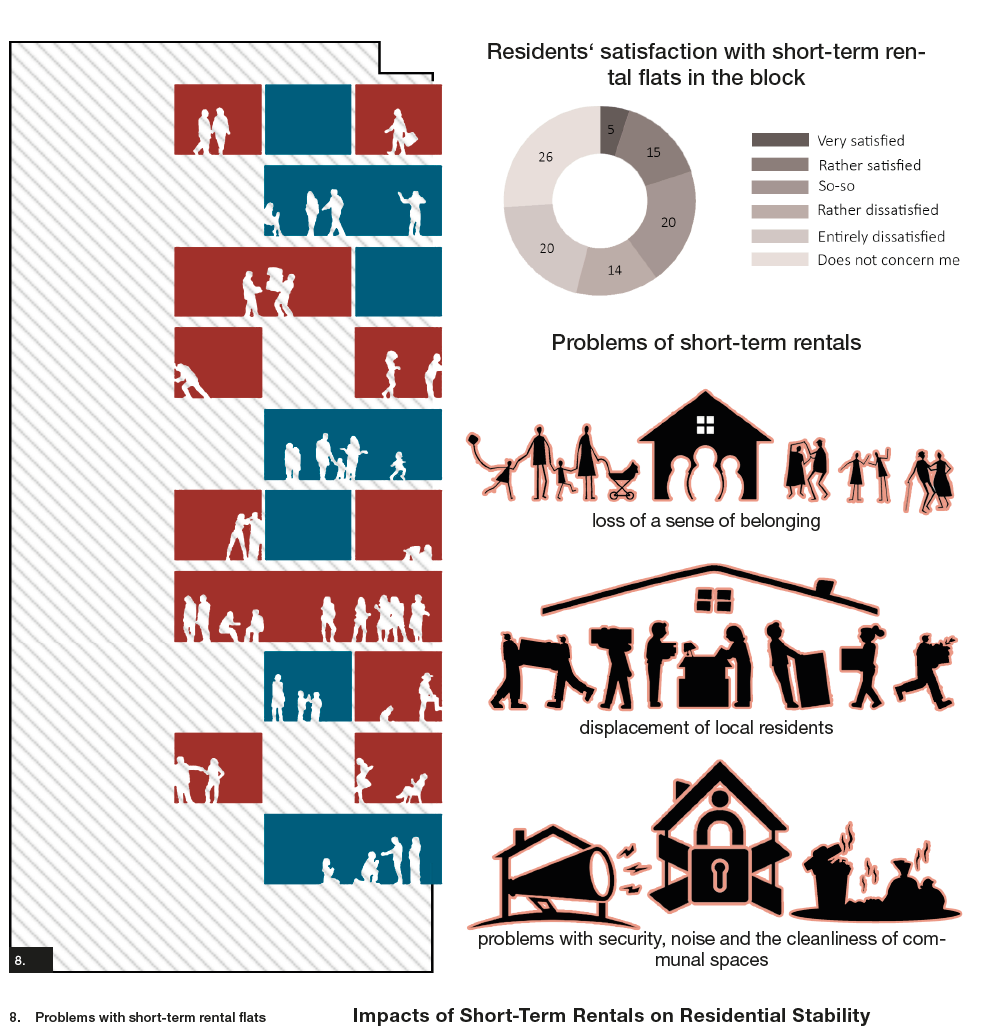
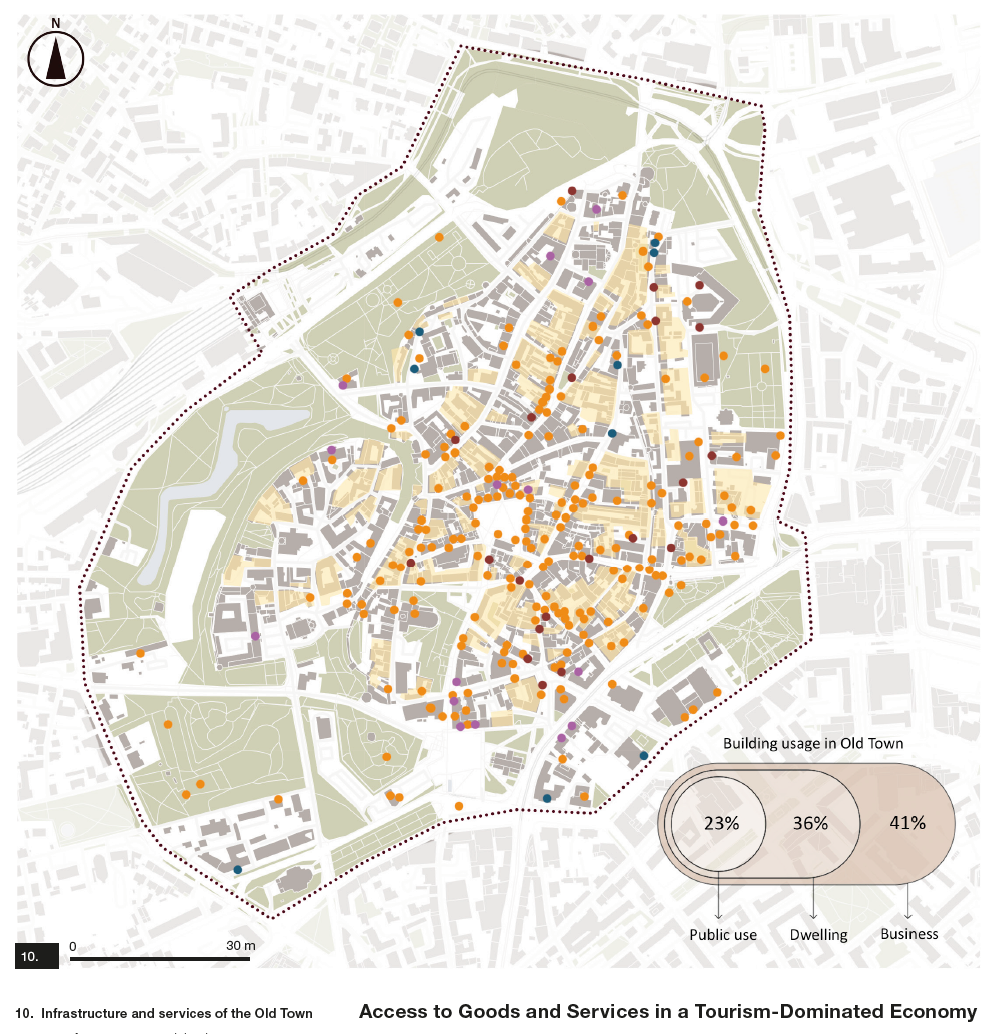
The chapter examines Tallinn’s Old Town as a living heritage environment shaped by the interaction of historical preservation, tourism growth, and everyday residential life. The findings show that overtourism has intensified existing structural trends, including the decline of residential functions and the increasing commercialization of ground floors, weakening the area’s socio-spatial balance. Survey results reveal the highest dissatisfaction in tourism-intensive areas, where noise, crowding, short-term rentals, and reduced residential comfort undermine community stability. While residents continue to value the Old Town’s architectural heritage, safety, and walkability, growing inequalities in tourism pressure affect quality of life. Overall, the study highlights the risk of further depopulation and social fragmentation, emphasizing that sustainable governance must balance tourism development with the needs of permanent residents to preserve the Old Town as a livable historic district.

FFPT is a Step Towards Compactness and Mobility as Key Aspects of Urban Accessibility in Tallinn
Svitlana Nazarenko, Stanislav Prahov
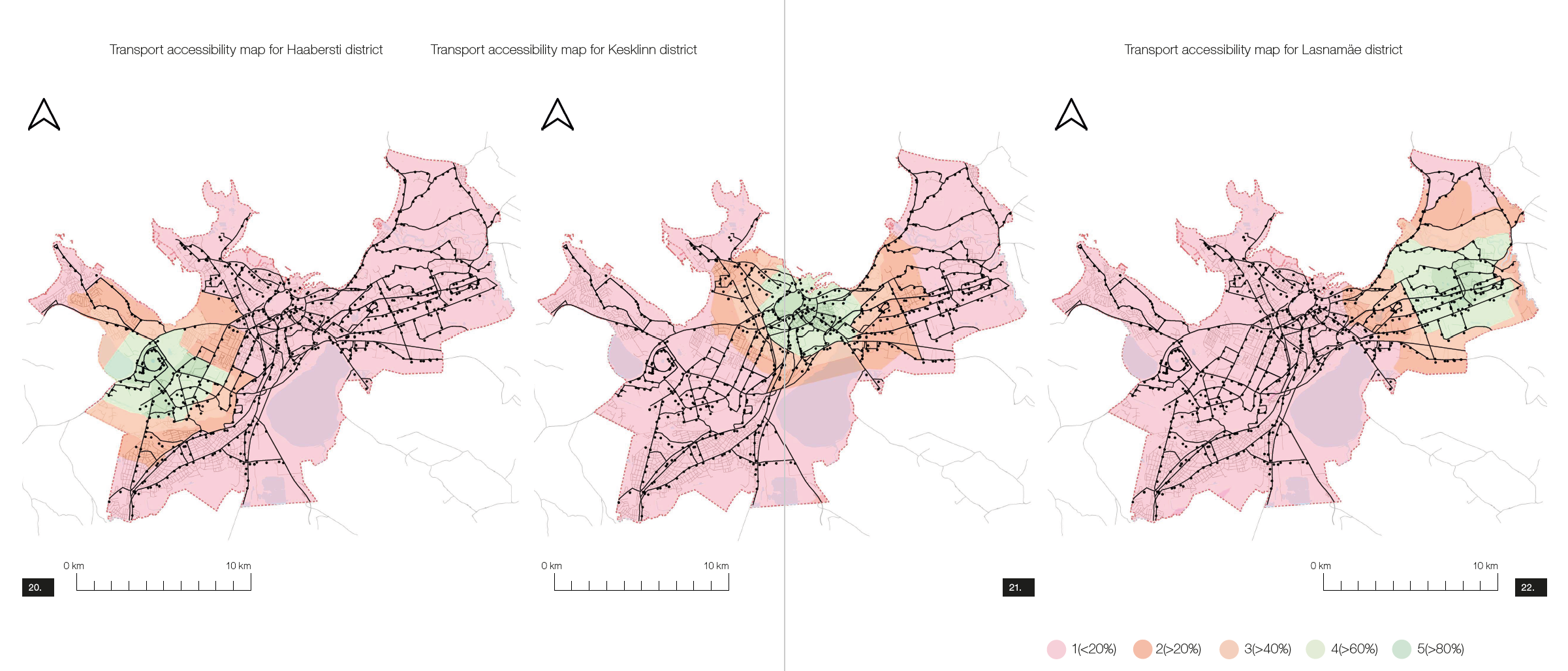
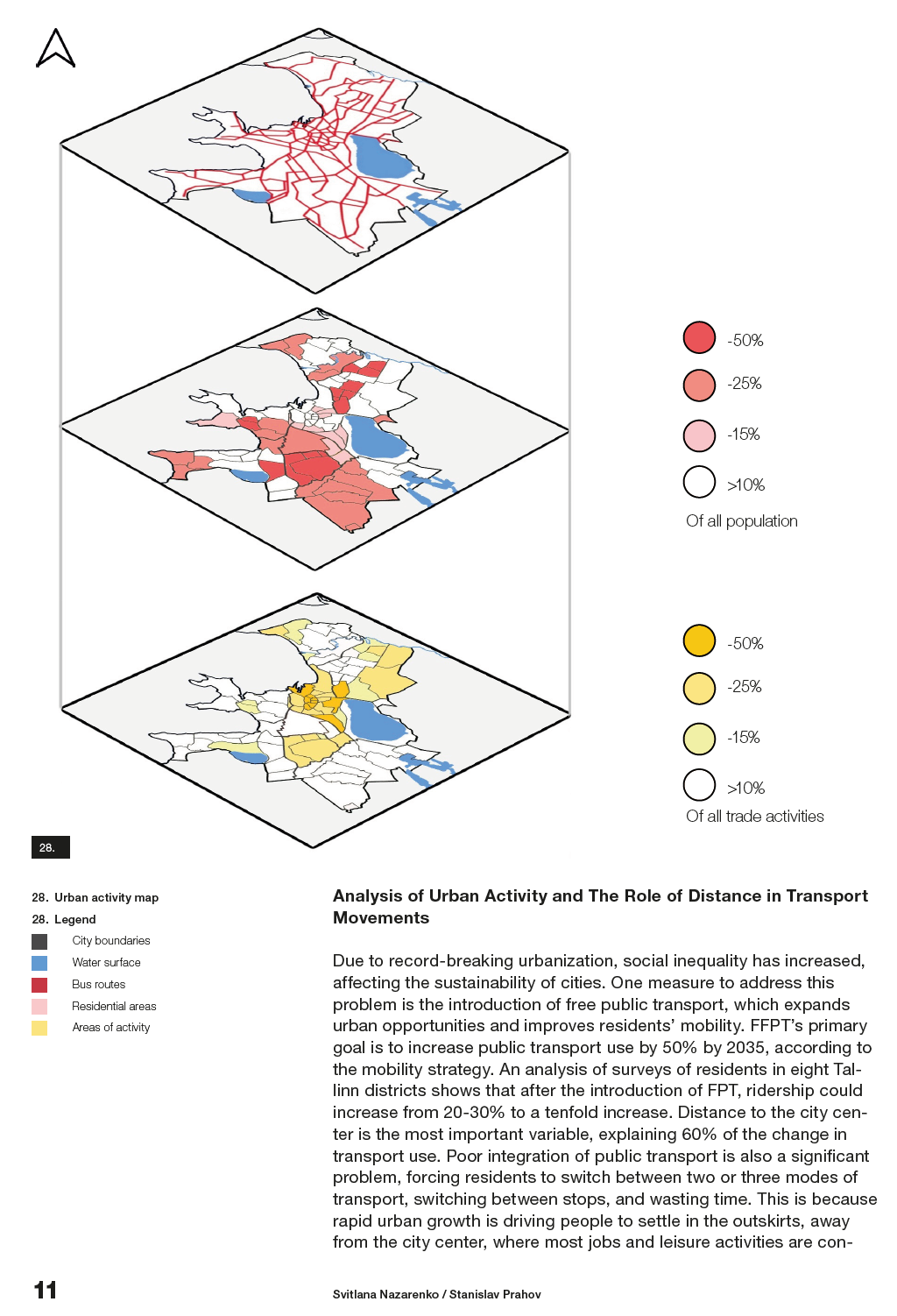
The study examines the role of Free Fare Public Transport (FFPT) in improving urban accessibility and mobility in Tallinn. While FFPT reduced financial barriers and increased public transport use among vulnerable groups, its overall impact on reducing car dependency remains limited. The analysis shows that structural factors—such as Tallinn’s radial transport network, long travel distances, poor route integration, and insufficient service coverage—continue to undermine accessibility and travel comfort. Residents identified long journey times, frequent transfers, and inadequate infrastructure as major obstacles, particularly in peripheral districts. Although FFPT improved mobility for students, pensioners, and low-income residents, it failed to attract middle-income families and car users who prioritize speed and convenience. Overall, the findings indicate that FFPT alone cannot achieve urban accessibility goals without comprehensive transport infrastructure upgrades, improved network integration, and complementary policies that limit car use and support sustainable mobility.
Kalma Sauna as the basis for comparison with Kalev Spa Hotel & Water Park
Sofiia Hordiichuk, Anastasiia Bohush-Zadnipriana
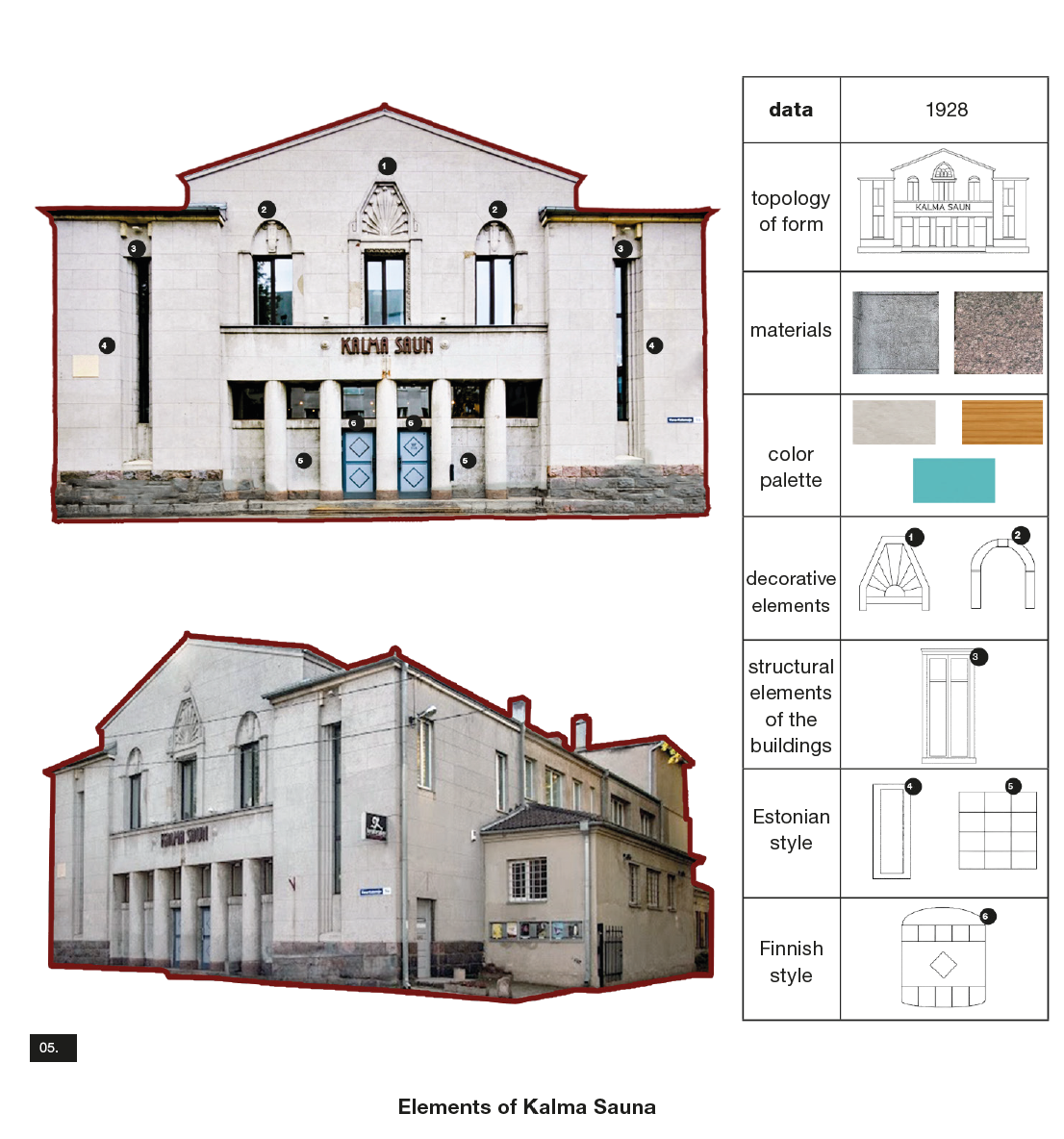
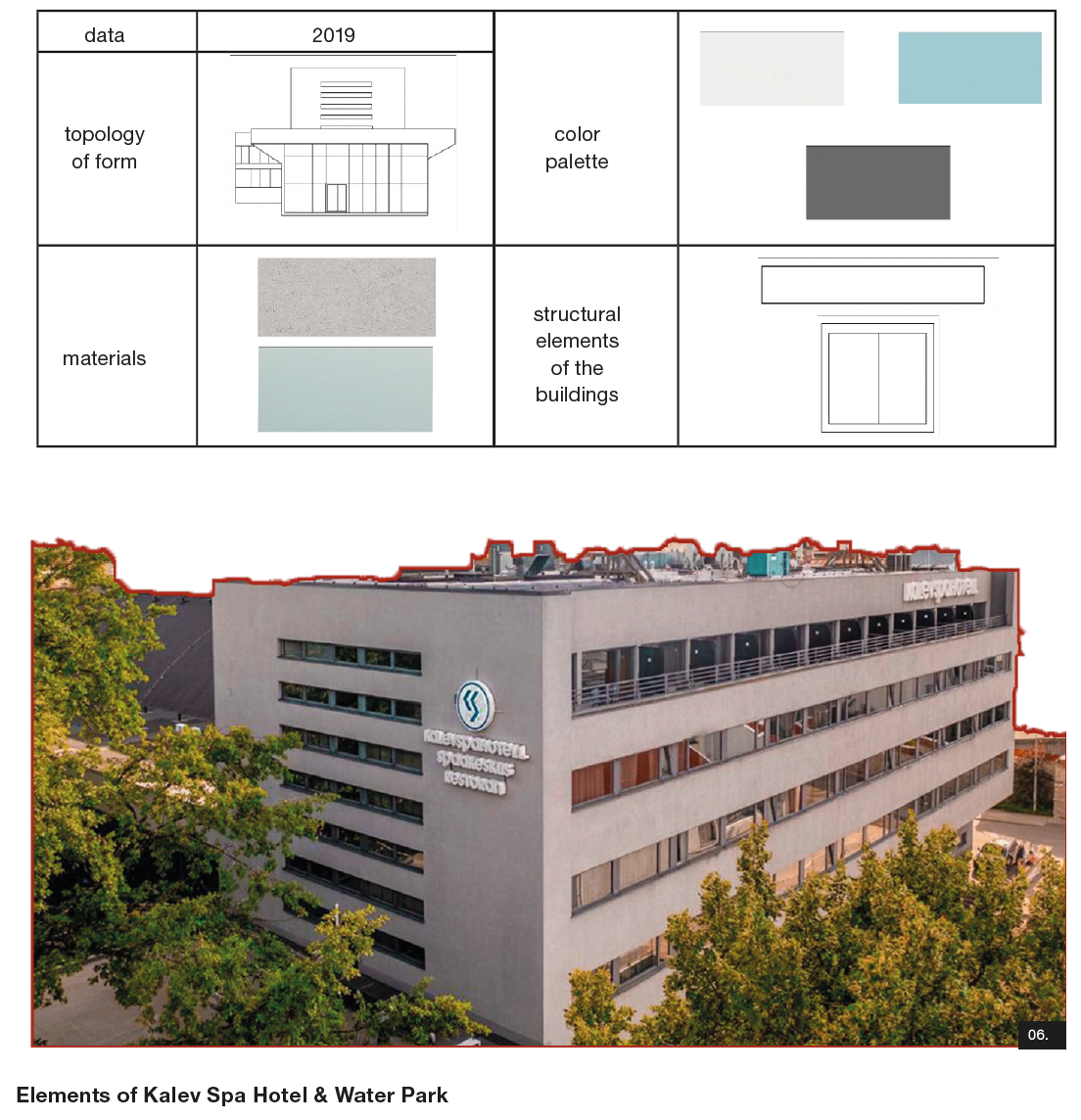
The study compares Kalma Sauna and Kalev Spa Hotel & Water Park to illustrate the transformation of wellness architecture in Tallinn. Kalma Sauna represents a traditional, human-scaled, mono-functional typology embedded in a residential neighborhood and oriented toward everyday local use. In contrast, Kalev Spa operates as a large-scale, multifunctional wellness complex with a landmark presence, combining spa facilities, accommodation, and leisure functions within a central, tourist-oriented location. The comparison reveals a shift from community-based public baths to metropolitan wellness clusters, while also showing that traditional saunas continue to play an important social role. Together, these typologies demonstrate how wellness architecture in Tallinn has diversified, allowing heritage-based and contemporary models to coexist within the urban landscape.