KURISTISCALE - Putting into proportion
Ines Johanna Grimm, Fiona Köhler
The implementation of the “re-scaling” concept for Kuristiku is imagined as a gradual and careful process that utilizes existing assets rather than replacing them. The idea is to bring everyday life back into the spaces between the buildings, to shift attention from large structures to human experience, and to create places where residents feel comfortable to stay, meet, and participate. Through small but well targeted interventions, the district can slowly regain a sense of proportion, identity, and community. Each project becomes a small step toward a more open and connected neighborhood.
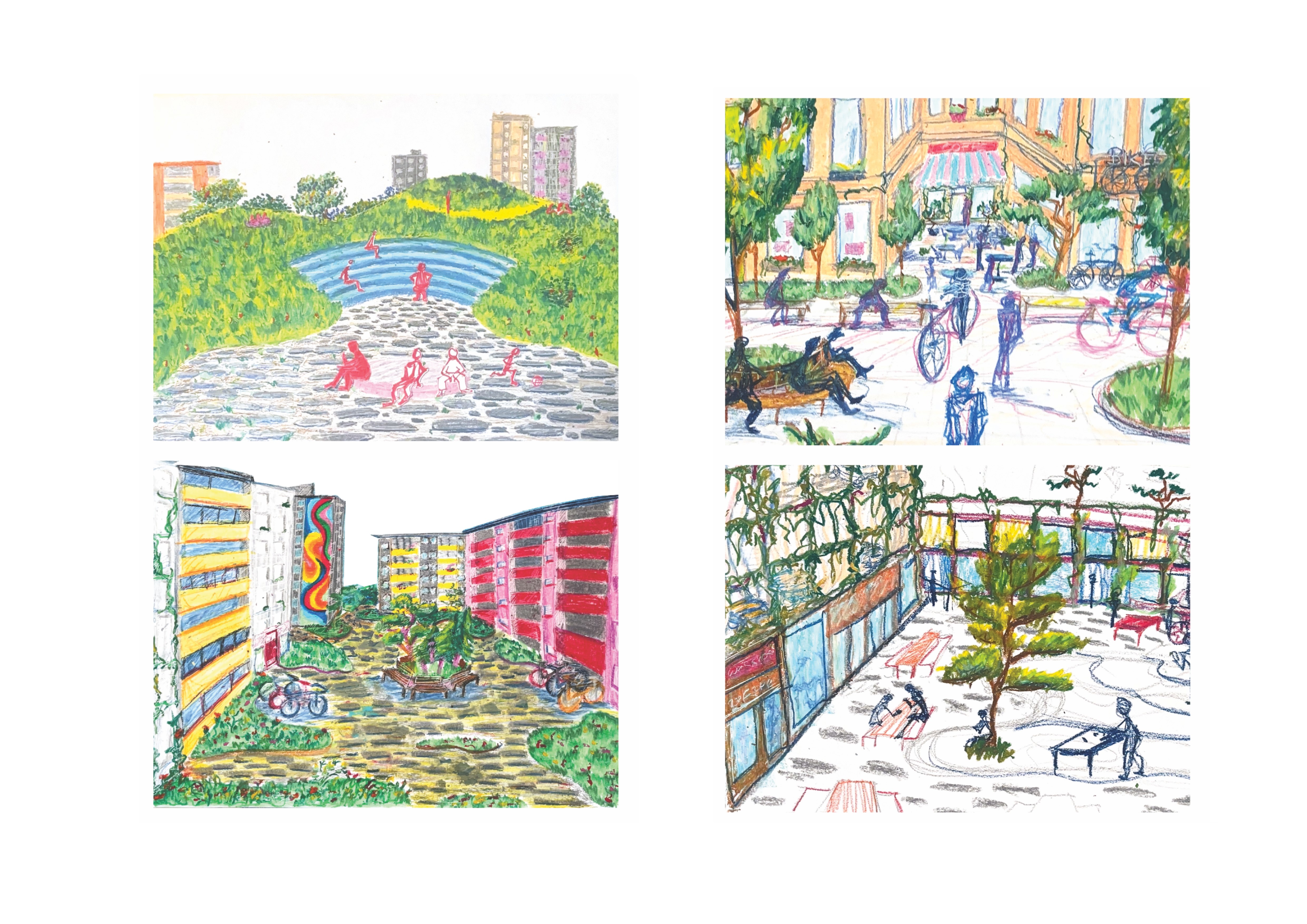
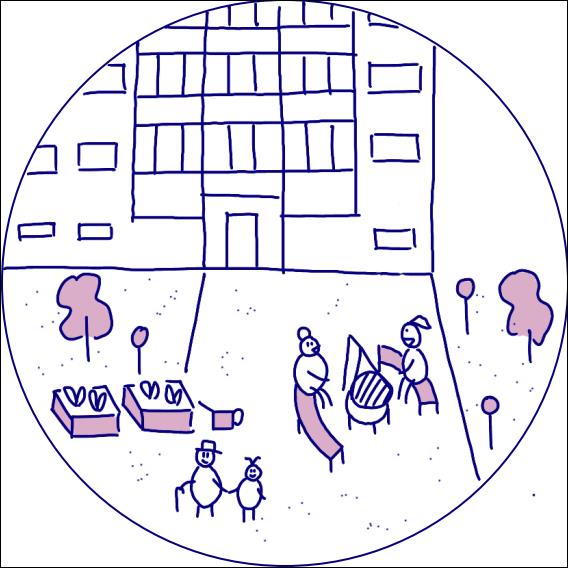
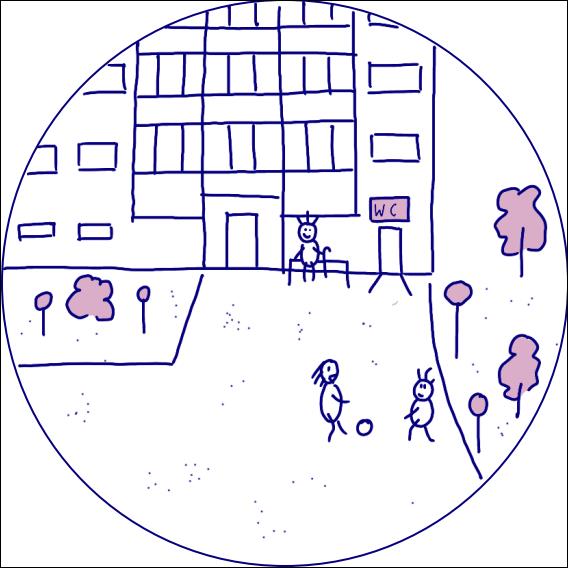
One example is the transformation of a typical prefabricated residential block and its courtyard. Here, the design introduces a few simple changes that can have a strong impact on how people use and perceive the space. Some ground floor areas are opened for small cafés, shops, or local services. Even one or two of these places can make a big difference, adding activity along the paths and creating corners where people might greet each other, have a coffee, or stop during their daily route.
The courtyard, which today feels empty and dominated by cars, becomes the social center of the block. Instead of large parking areas, there are now green surfaces, trees, and a mix of places to sit, play, and gather. Benches, small playgrounds, community gardens, and open-air bookshelves invite casual encounters and everyday activities. The idea is that residents can meet naturally, children can play within sight, older people can rest in the shade, and everyone can use the space throughout the year. A few small topographic changes make the area more defined and help to protect it from wind or strong sun.
The façades of the surrounding buildings are refreshed with vertical greening, warm colors, and light cladding elements. These changes give the block a softer and more welcoming appearance and create visual variety without major construction. Together, these improvements create a setting where people want to spend time outside, take part in shared activities, and feel pride in their surroundings. The project shows that even modest design moves can fundamentally change the mood of a place and rebuild a sense of togetherness in Kuristiku.
Unfolding the Microrayon Vision
Marco Tarrio Torres, Sven Spallek
The transformation of Kuristiku is a project of completing an unfinished modernist vision. Within the context of Tallinn’s Soviet housing legacy—ranging from the concentric morphology of Väike-Õismäe to the linear spine of Lasnamäe—Kuristiku represents a unique urban fragment. Its development was abruptly halted by the collapse of the USSR, leaving the original planning goals frozen in a half-finished state.
Our analysis of the initial concept reveals a vision that was remarkably progressive for its time. It proposed a radical separation of traffic to create car-free residential blocks and utilized dense green perimeter buffers as a climatic shield. However, while the technical logic was forward-thinking, the human scale and pedestrian connectivity were overlooked. Today, this results in a landscape of ‚No-Man‘s-Land‘—a series of unprogrammed voids, informal parking and missing social infrastructure.
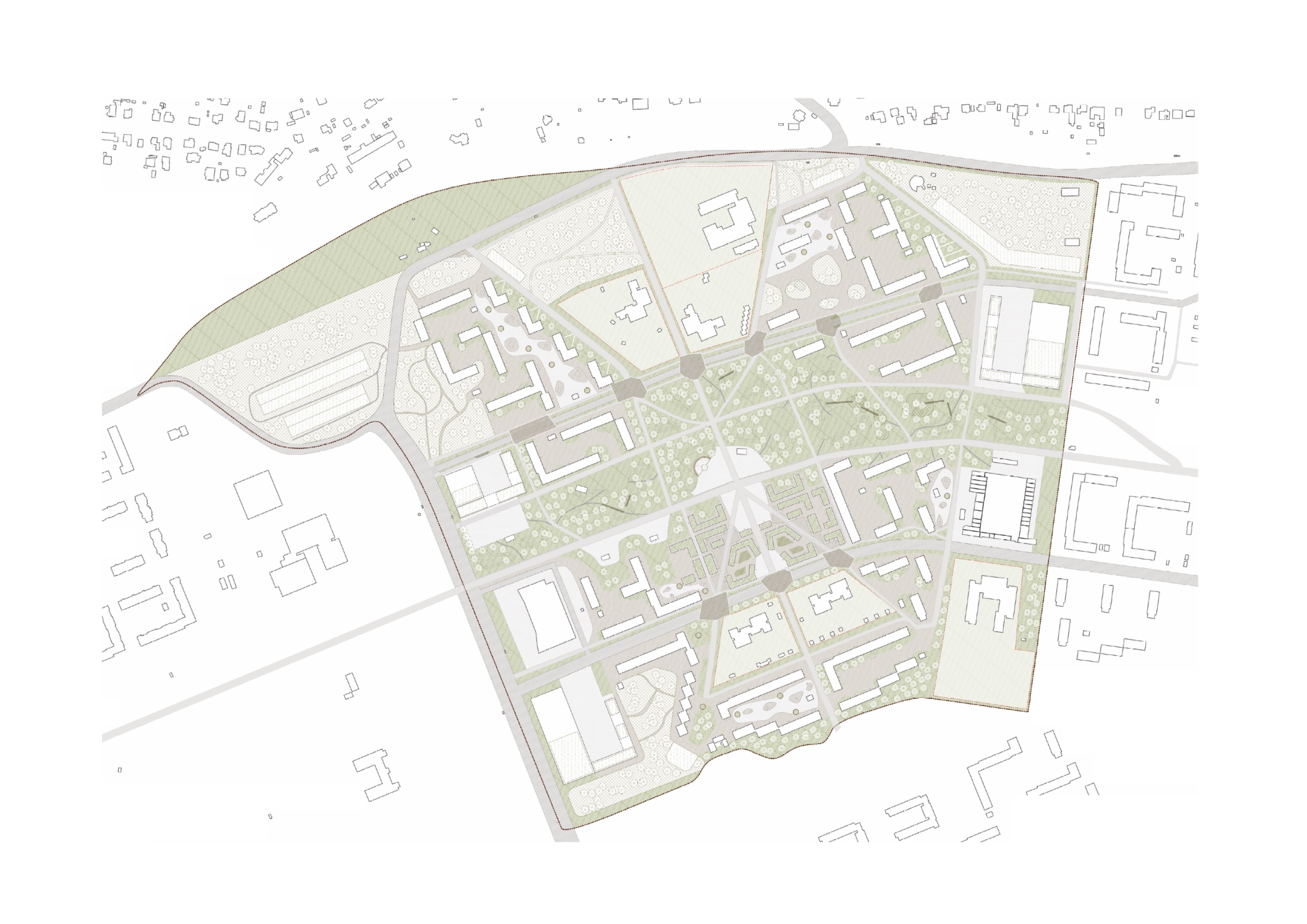
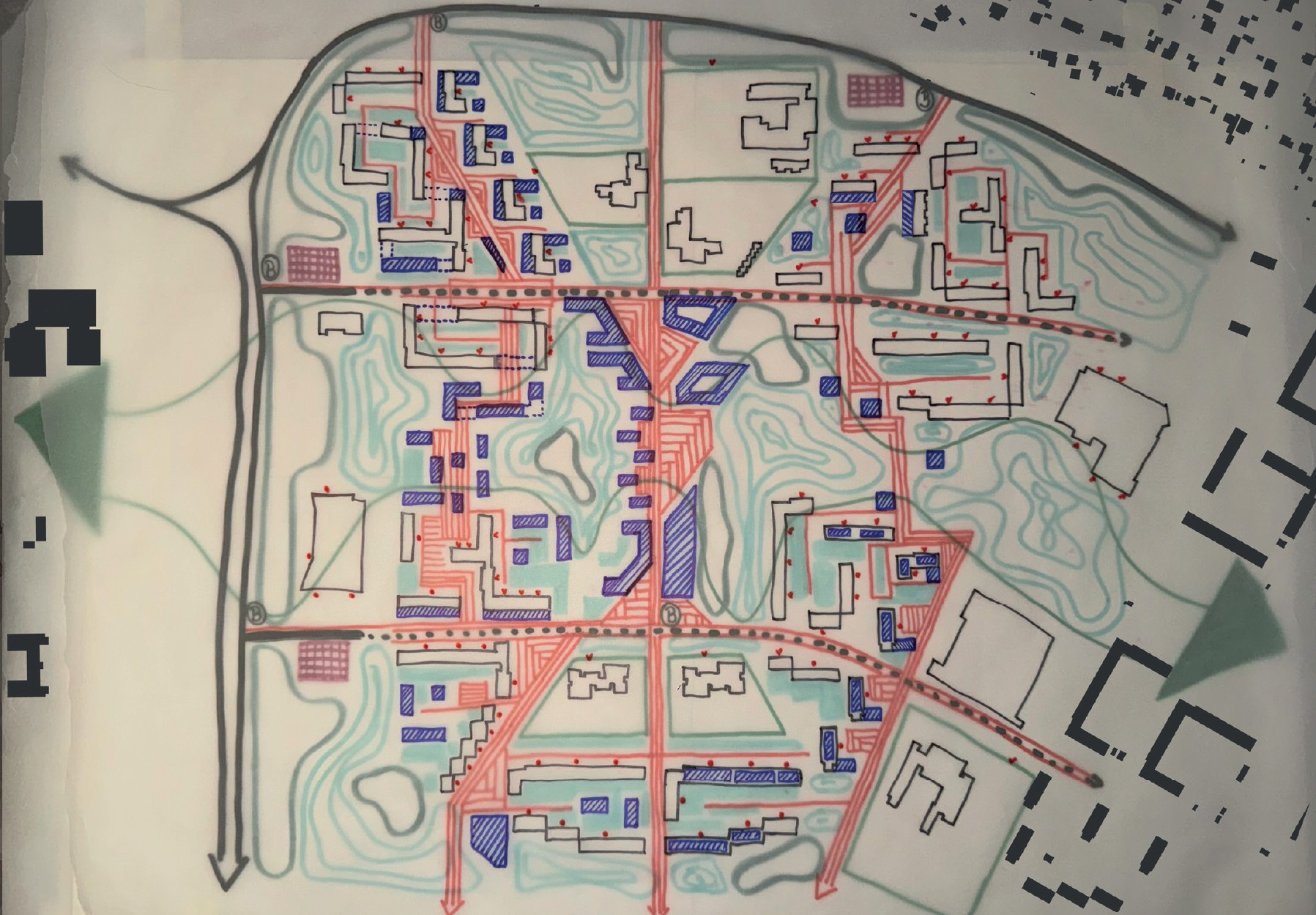
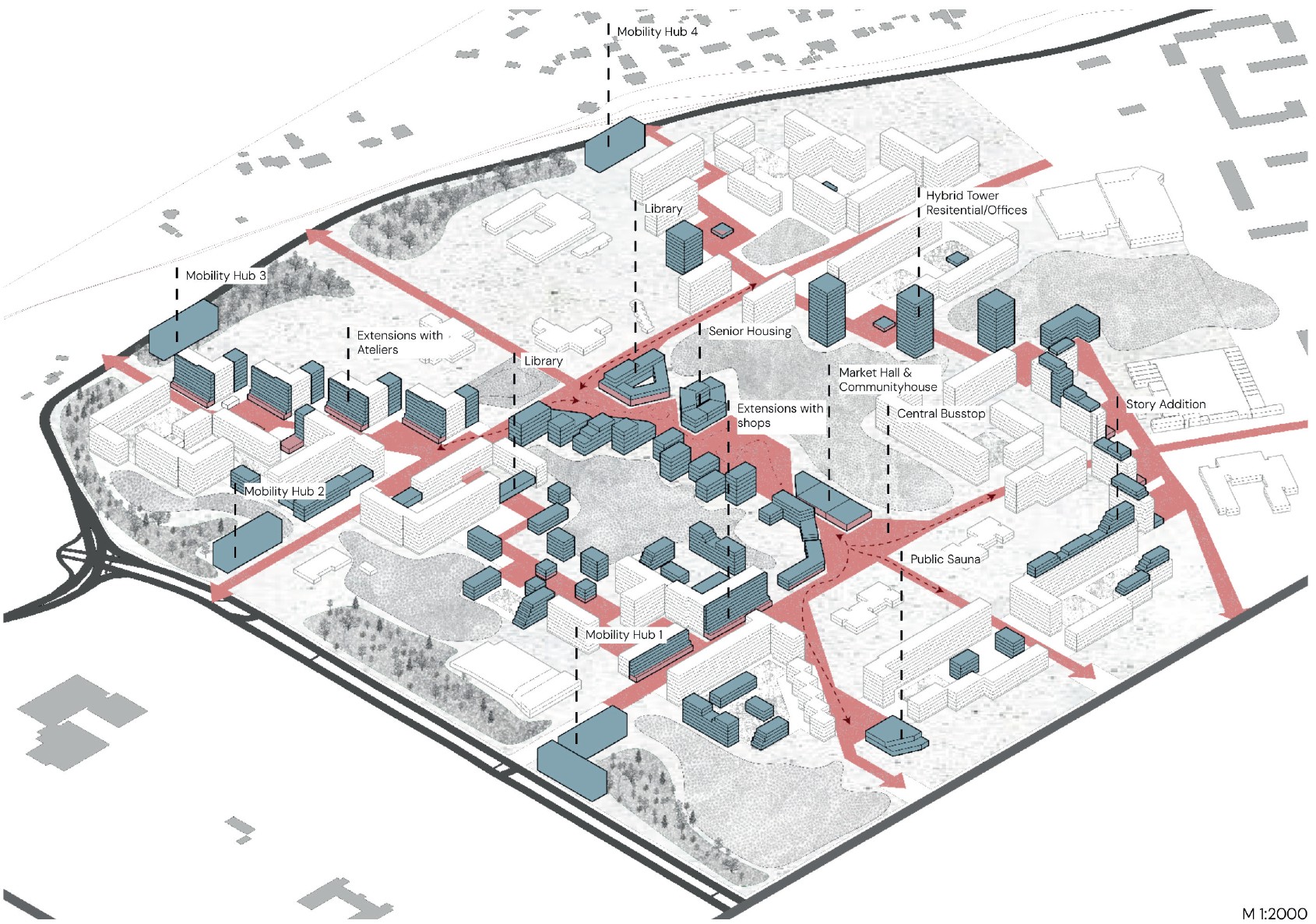
Rather than rejecting this heritage, our strategy is to learn from these original qualities and evolve them into the 21st century. We have identified several development areas based on three strategies: reconnecting the blocks, introducing new typologies, and integrating functional green spaces.
To unify the isolated residential cells, we propose a network of public plazas that fulfil the original goal of ‚connected living‘ through a more social lens. We reinforce the visionary car free blocks by redesigning the planned mobility hubs at the edges as mixed-use buildings, while traffic-calming the main axes to prioritize residents. We also break the monotony of the district by introducing the missing landmarks: high-rise towers in the east, active ground-floor extensions, and a social centre featuring a market hall and a retirement home. Finally, we complete the original green vision. The unbuilt highway corridor is transformed into a continuous public park, and anonymous green strips are evolved into communal gardens. By integrating these interventions, we are not just altering the site; we are completing the story of Kuristiku by giving the modernist fragment a human-scale urban fabric.
Kuristiku or Life in the Woods
Felix Thomas Galm, Lucas Alexander Zirn
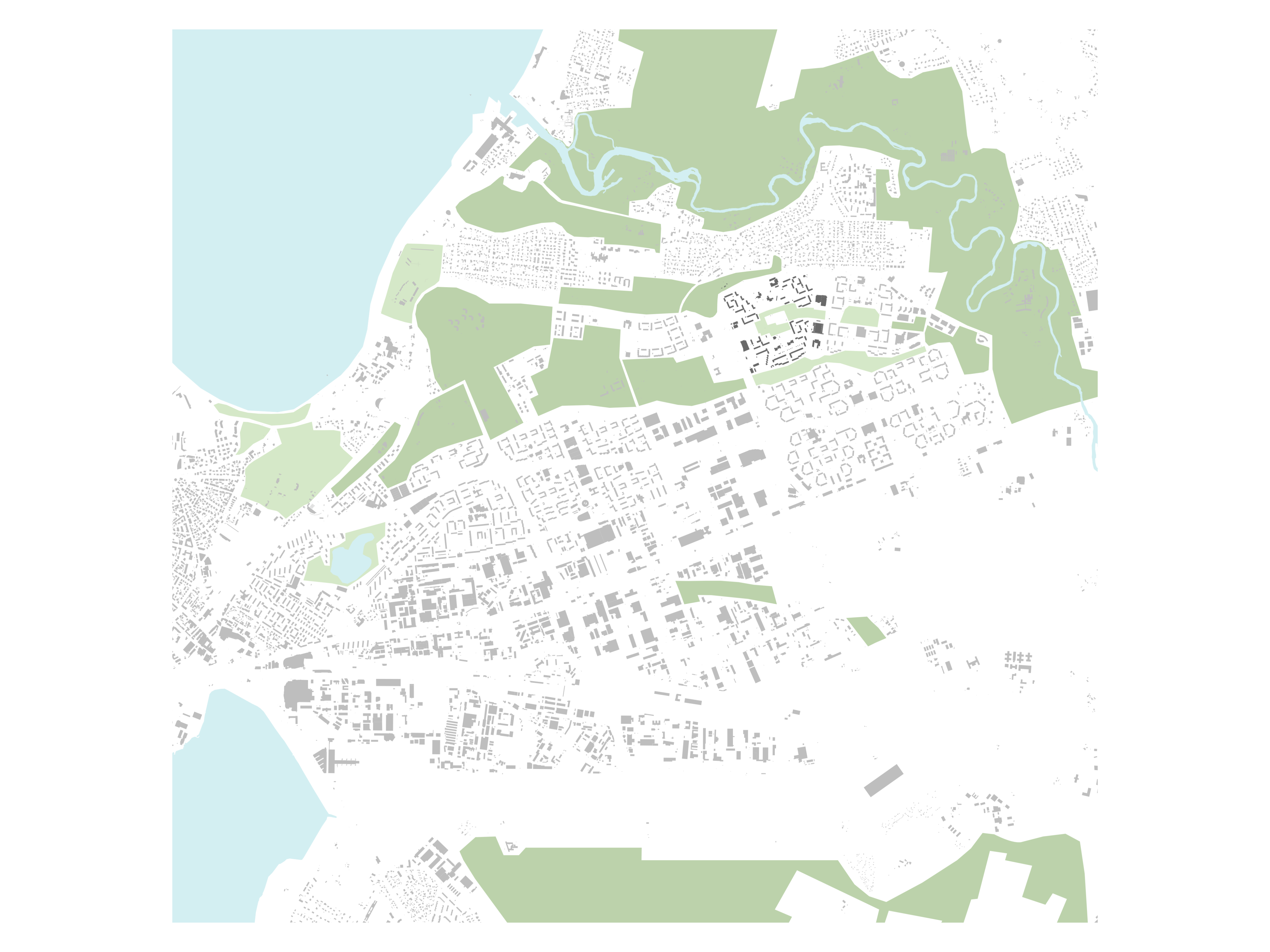
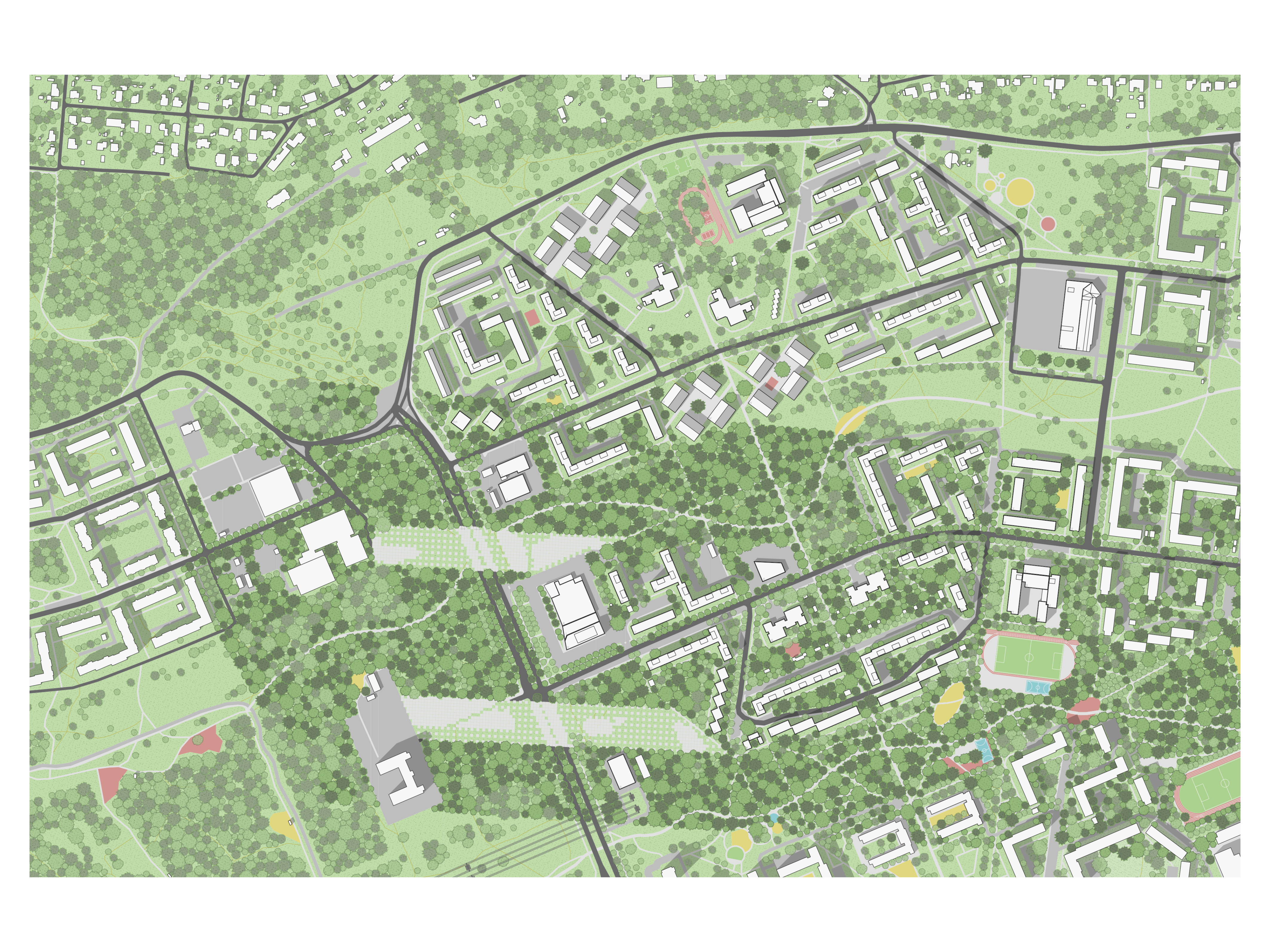
Our concept revolves around creating a dynamic forest system within the area of Kuristiku, to both link natural green zones into an interconnected green corridor for the whole of Lasnamäe and to add to identity that lies within the area by creating a forest as a tangible space for humans, as well as wildlife. The idea of introducing a large forested area came from our understanding, that forests are deeply rooted in the cultural identity of Estonia.
To kickstart that development we would like to organize tree planting actions in the area of the former Lasnamäe Airfield, which coincidentally is perfectly located and sized to connect the surrounding natural green zones of the Pirita River Valley Conservation Area and the Tondiraba Bog, that already are protected habitats for flora and fauna.
Starting from those patches established in the first step, the forest shall continue to grow outwards in the next couple of decades; this process does not require a lot of investment, except some upkeep and maintenance.
Additionally, to growing this forest, we are also planning to implement areas for recreational use located on remains of the former runways, which we plan to connect into two clearings within the forest; those clearings are examples of places for human activity inside the forest, that we want to balance with places without human activity allowing wildlife to flourish.
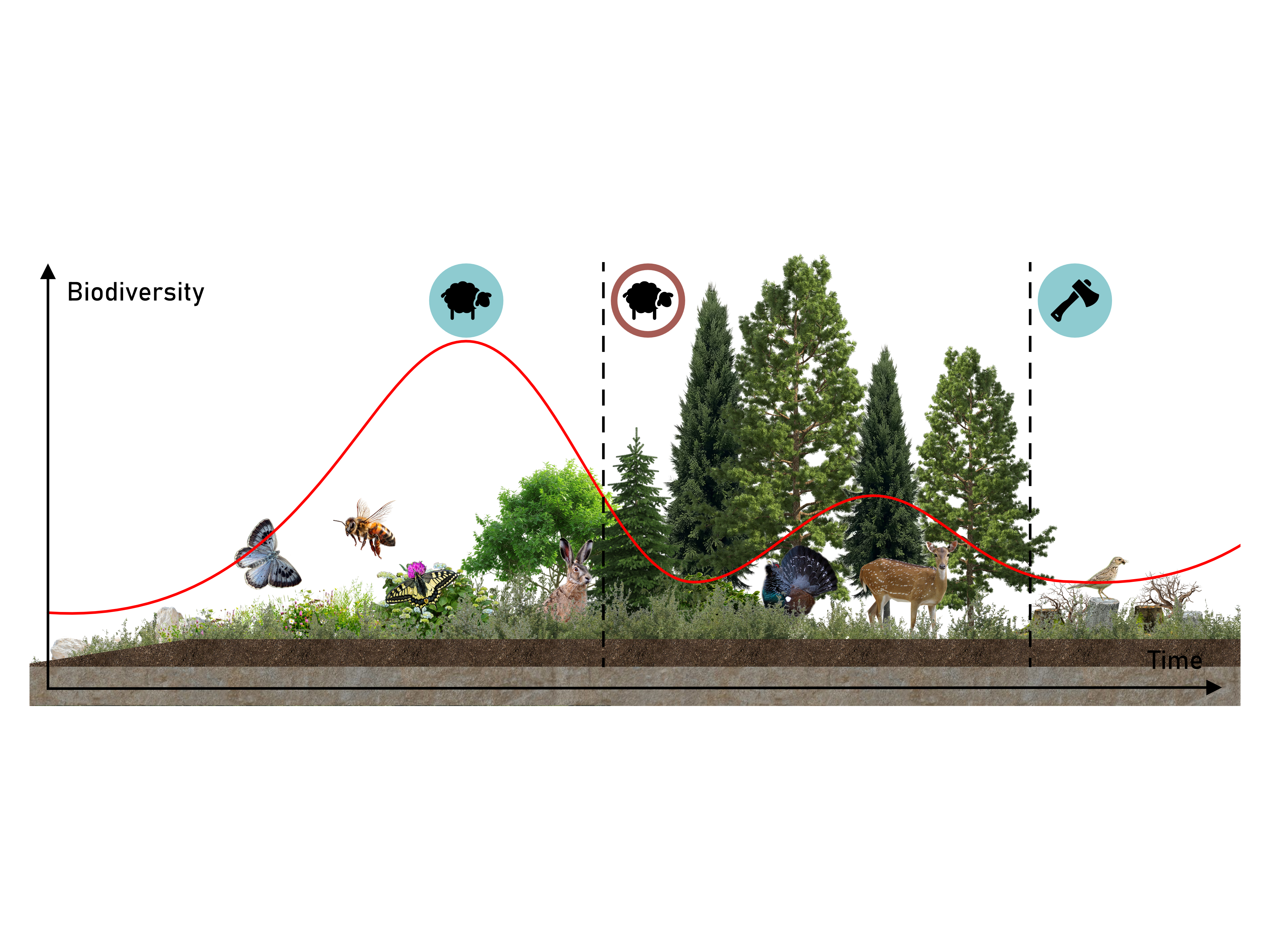
When to forest reaches its maximum expansion after a couple of decades, we propose to cut down parts of it, to not only get some wood out of it, but also to recreate needed habitats for flora and fauna, as the biodiversity of a forest is smaller compared to the biodiversity of alvar grasslands, which are meadow-like biomes with huge a variety of insects and plants. This process is meant to be repeated whenever the forest reaches a certain coverage.
Having this cyclical forest system, that navigates between forest and alvar helps to also navigate between biodiversity and identity, which in our eyes are main aspects when speaking about the resilience of a neighborhood or district.

Resilience through Resident-Based Gradual Transformation
Paula Mohrbacher, Hannah Weber
We are aiming for a gradual habitant-induced transformation of Kuristiku which works in three phases and on different scales.
Firstly, inhabitants discover the potential of their district through events. They appropriate spaces like basements, courtyards or public open spaces like parking lots by organizing walking tours, cafés, gardening workshops or an open-air cinema. These events could be organized by a neighborhood initiative like Lasna!dee. The appropriation of open spaces could also happen in cooperation with the schools and kindergartens of Kuristiku.
In the second phase the new uses of those appropriated facilities are established further through constructive measures. On the building level this could mean that the basement that is used by a neighborhood initiative, for example as a workshop, could be adapted to the use by adding bigger windows and a more visible entrance. On courtyard- and open space level, we aim a basic constructive transformation regardless of if there were appropriations or not, lights and toilets should be added to support communal usages.
The third phase links those newly established programs in a bigger context. In the third phase infrastructural measures like building bike lanes. On open space level, this could mean construction a building; a green house in a community garden, changing rooms for a sports field or a community center in a place where people like to meet.
The inhabitant-induced gradual transformation is a process which does not develop evenly, there could be courtyards that are equipped better than others due to the initiative of its inhabitants. Every first-phase transformation could be an inspiration for others and influence the structure of the framework that makes up Kuristiku.

KurisCO-Lab
Noah Daum, Dominik Vormbruck
Analyzing Kuristiku at different scales reveals both vulnerabilities and strong potentials. On a metropolitan level, the district shows a clear imbalance in mobility resilience. While private car travel enables wide access within 20 minutes, public transport options are limited, creating a strong dependence on car-based mobility. At the neighborhood scale, however, Kuristiku already functions as a walkable 15-minute city. Daily needs, schools, shops, and services are reachable within 10 to 15 minutes on foot, providing a solid foundation for resilient development.
A major challenge lies in the district’s central area, which is dominated by large parking lots and low-quality green spaces. These sealed surfaces disrupt connections, fragment the district, and fail to support social or ecological interaction. Green spaces in the middle and at the edges remain underused and disconnected, acting as barriers rather than connectors. In addition, the existing path network is strongly car-oriented, with many routes leading toward central parking areas instead of supporting internal and external connectivity.
Socially, Kuristiku is characterized by monotonous residential areas with limited interaction. While zones around schools, shops, and kindergartens function as social nodes, many housing areas remain introverted and lack spaces for community life. This separation weakens cohesion both within sub-districts and across Kuristiku as a whole.
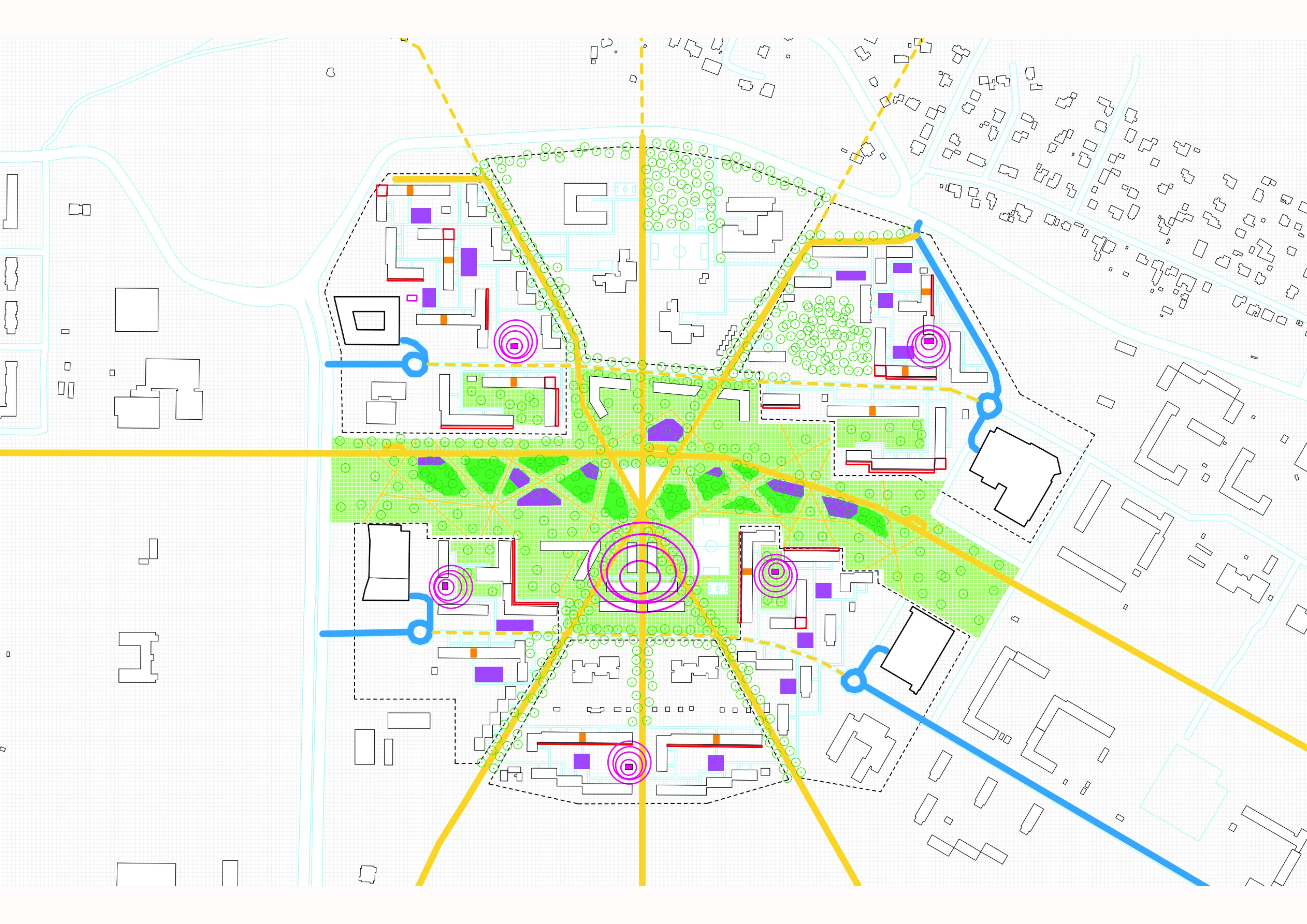
KuristiCO-Lab defines resilience as the ability to strengthen social cohesion, ecological diversity, and adaptive mobility while respecting existing structures. The main goal is to transform the central corridor into a biodiverse green spine that reaches into surrounding neighbourhoods, improves environmental quality, and reconnects the district. At the same time, mobility will be restructured to prioritize walking, cycling, and public transport. Car traffic is reduced by relocating parking to the edges of the district, creating dead-end streets for cars while extending existing streets as pedestrian and bicycle paths. A mobility highway connects Kuristiku to neighbouring districts and the inner city through bike lanes and bus stops.
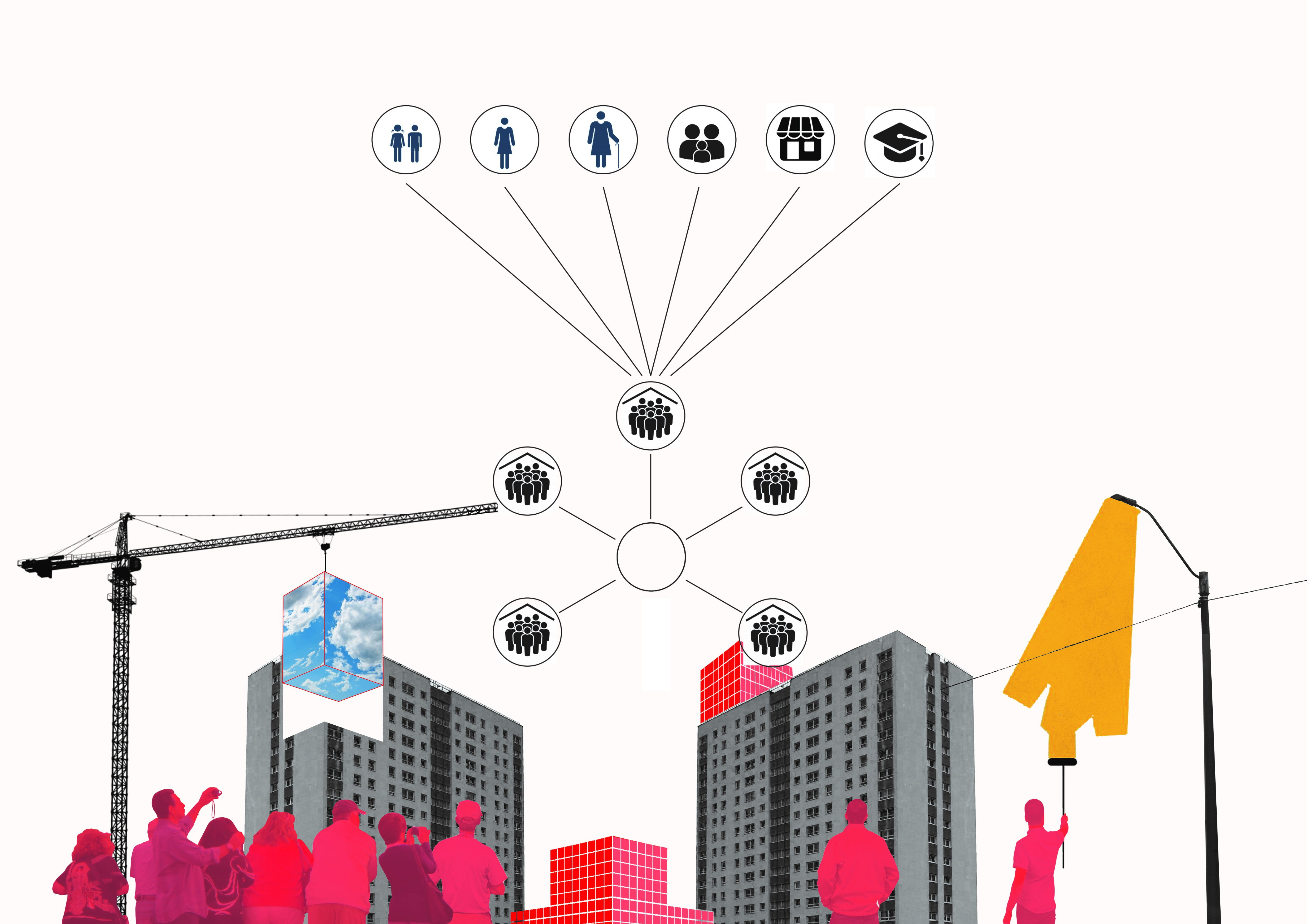
To address social fragmentation, community hubs are introduced within housing districts. These spaces support self-organization, decision-making, and everyday interaction among residents. Semi-public courtyards, adaptable green areas, and frameworks on building facades allow inhabitants to actively shape their surroundings. Public ground-floor spaces along the green corridor help mediate between large residential structures and open space.
Change in Kuristiku is envisioned as a gradual process. Rather than large disruptive projects, resilience is achieved through small-scale, incremental interventions that are easy to implement and widely accepted. A phased timetable guides development, starting with quick, low-threshold actions, followed by mobility restructuring, green space redesign, and long-term structural adaptations. Residents of all ages are not passive users but active participants, ensuring that Kuristiku evolves together with its community, ecology, and everyday life.

Resilient Kuristiku
Silas Schmidt, Hannah Tilenius
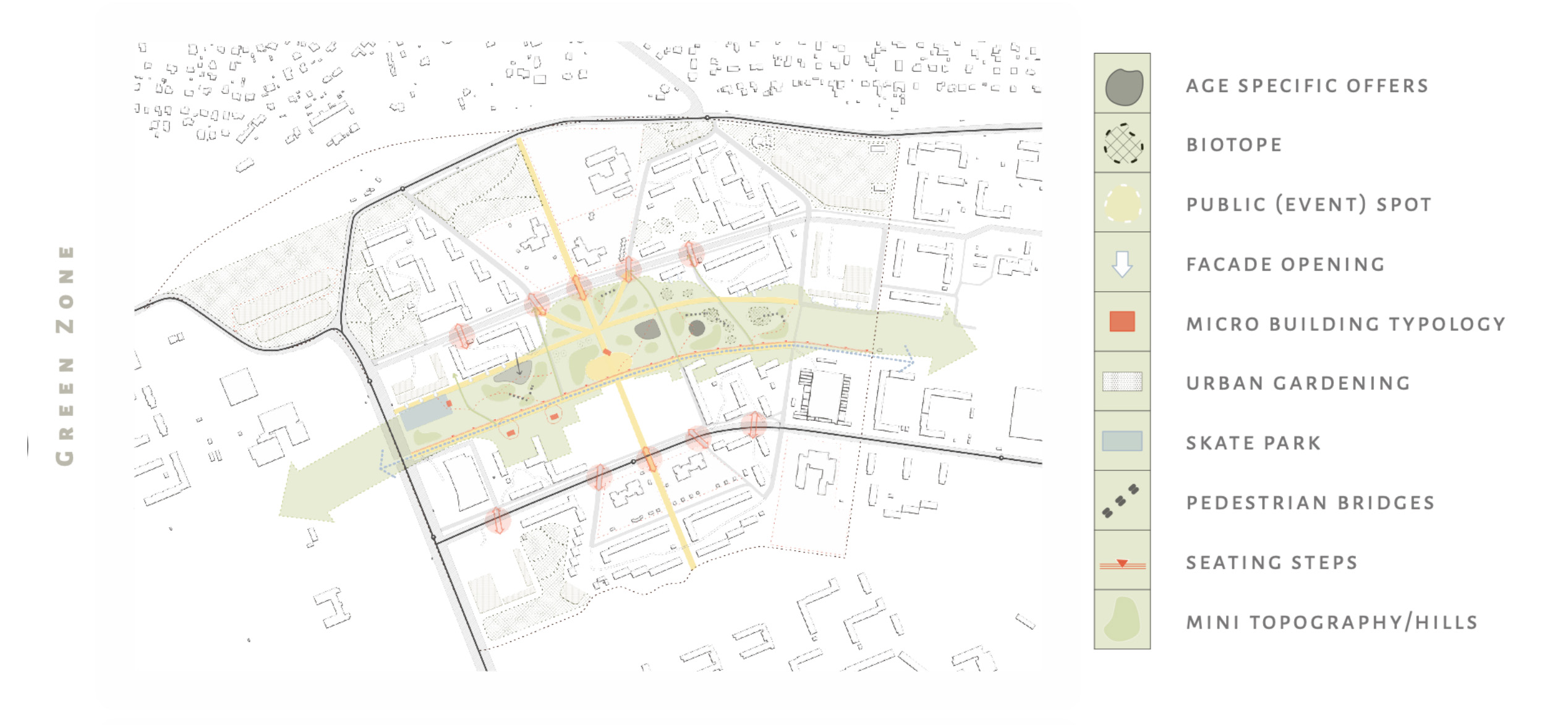
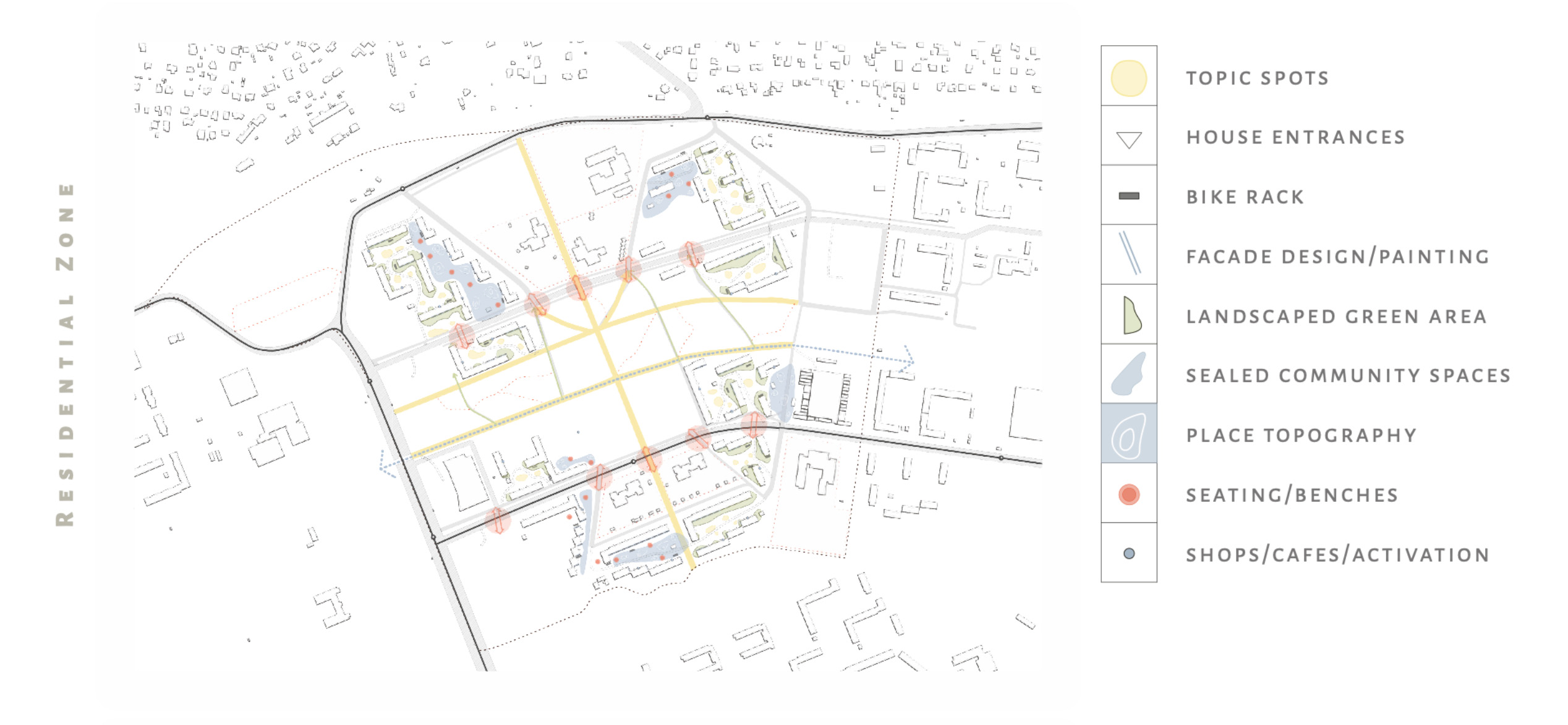
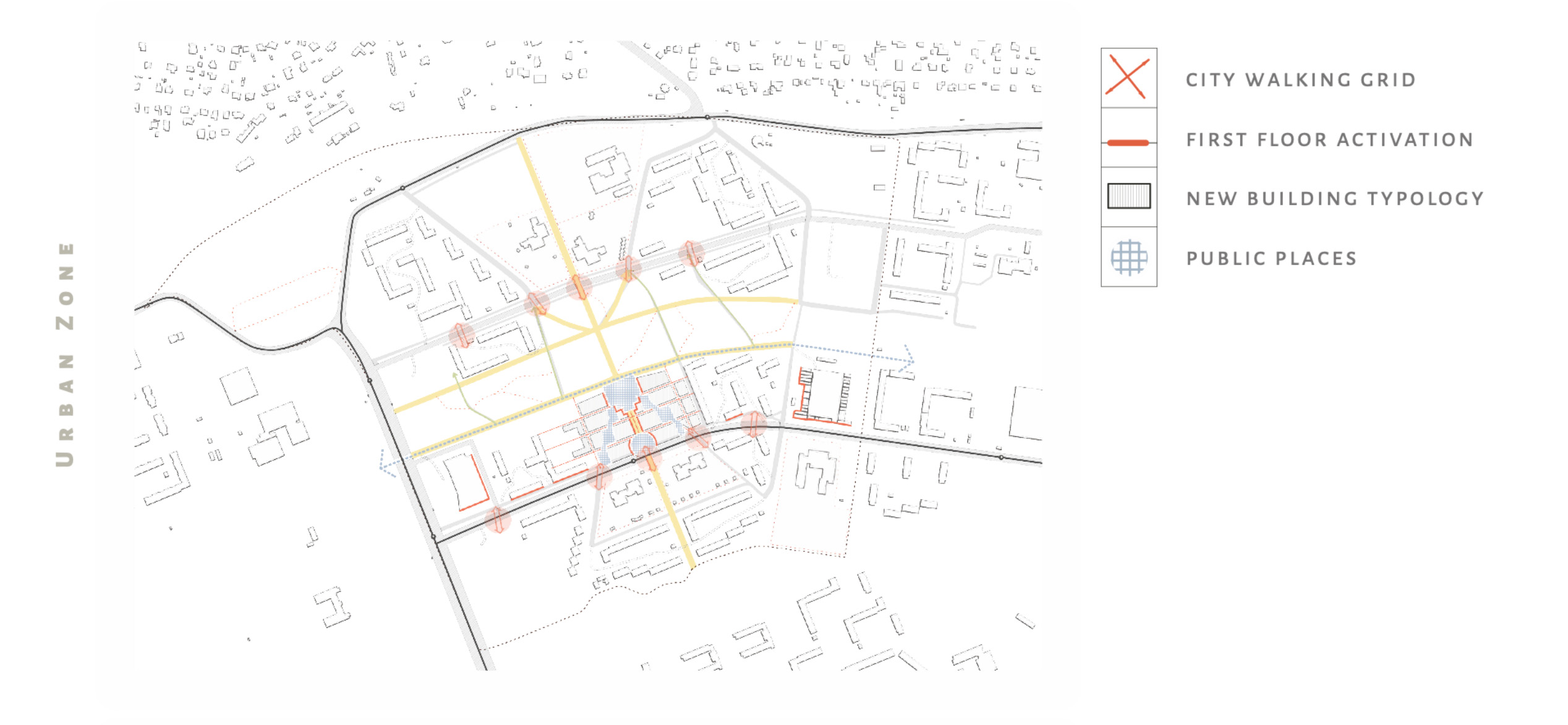
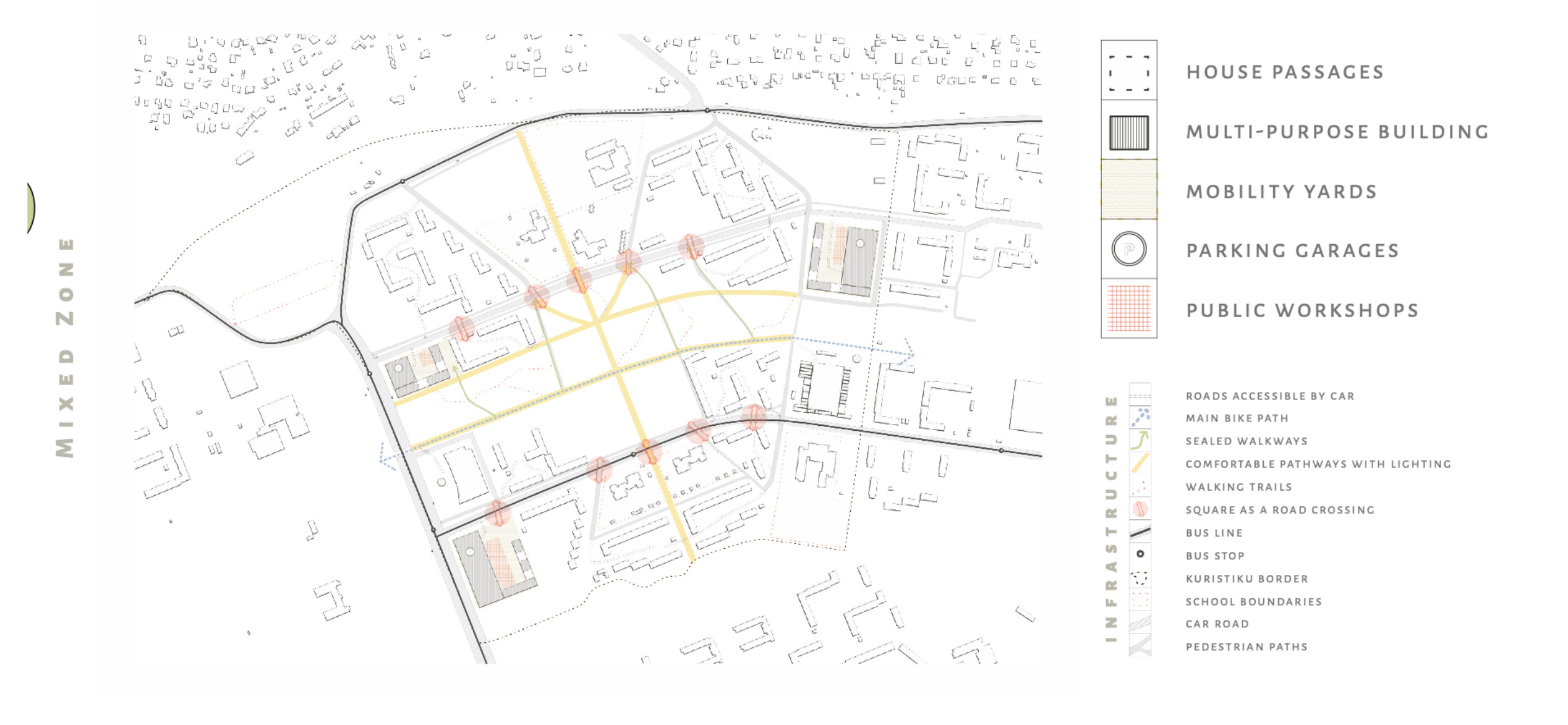
Our concept for making Kuristiku resilient addresses spatial fragmentation, missing social cohesion, and lack of investment. By closing these gaps, Kuristiku will become a well-connected, undivided neighbourhood with consistent spatial quality that fosters biodiversity and the well-being of its inhabitants. Its residents will form a strong, diverse social network, creating social security, a shared sense of belonging, and a stable, self-sufficient economic structure offering chances for everyone.
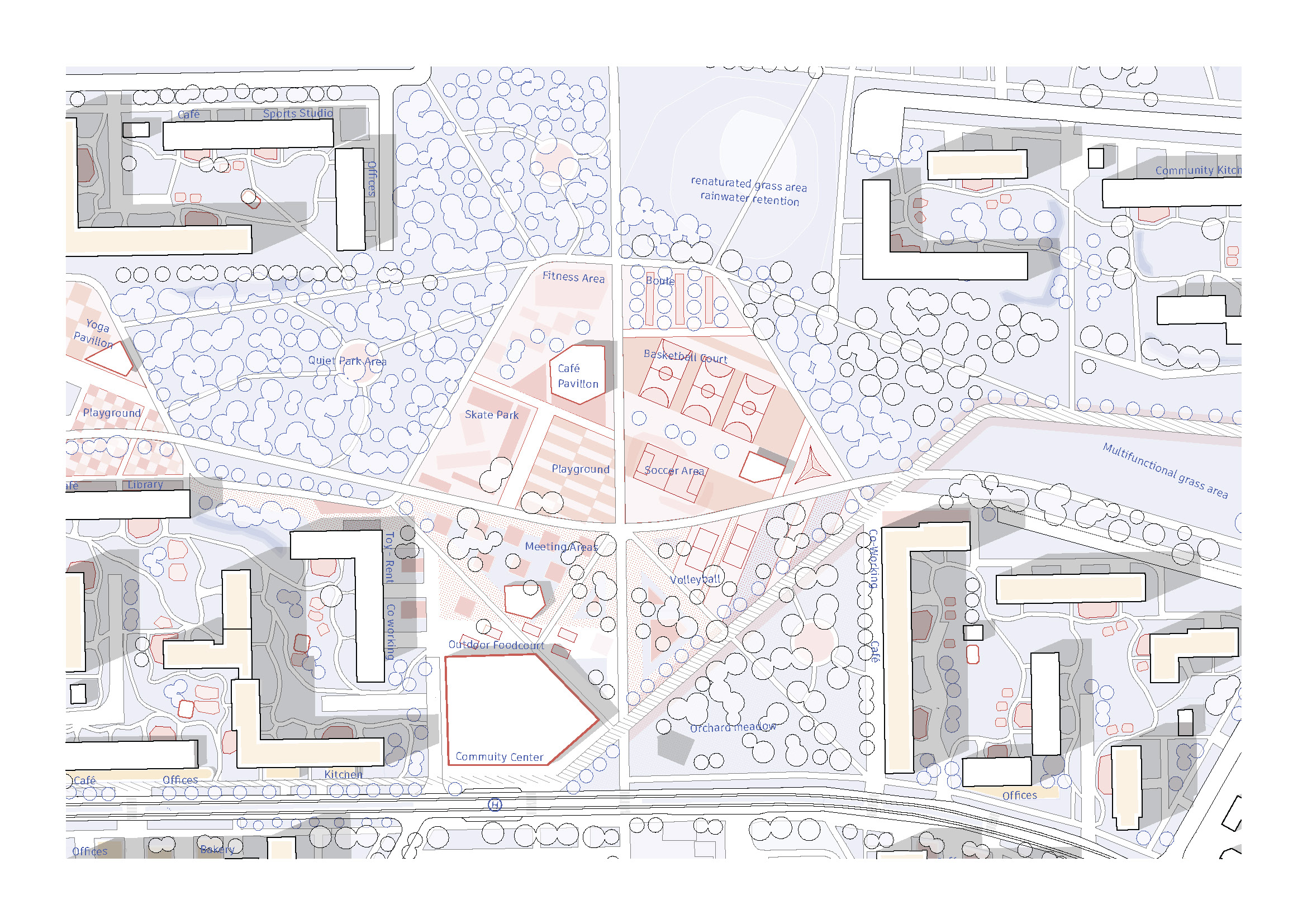
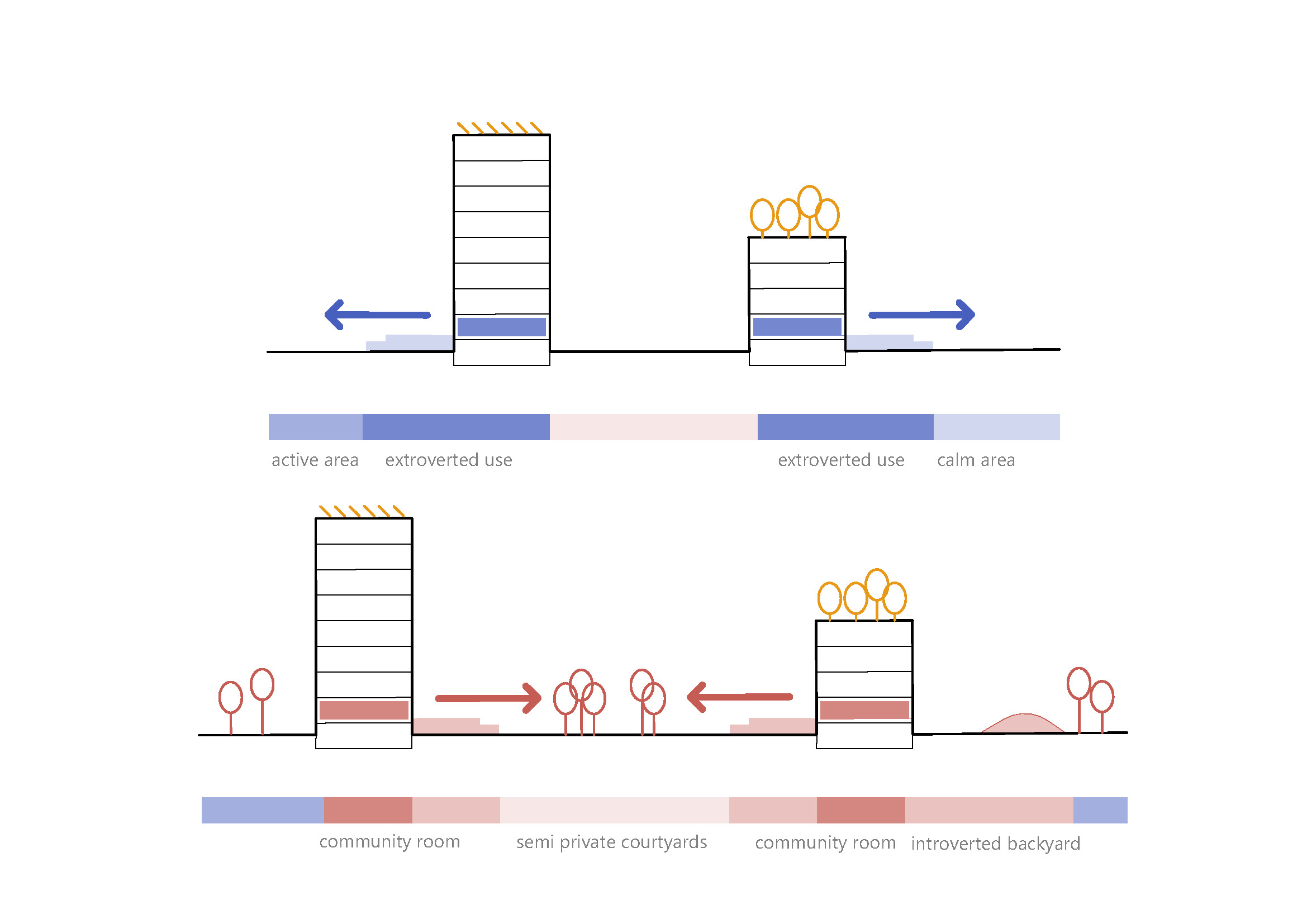
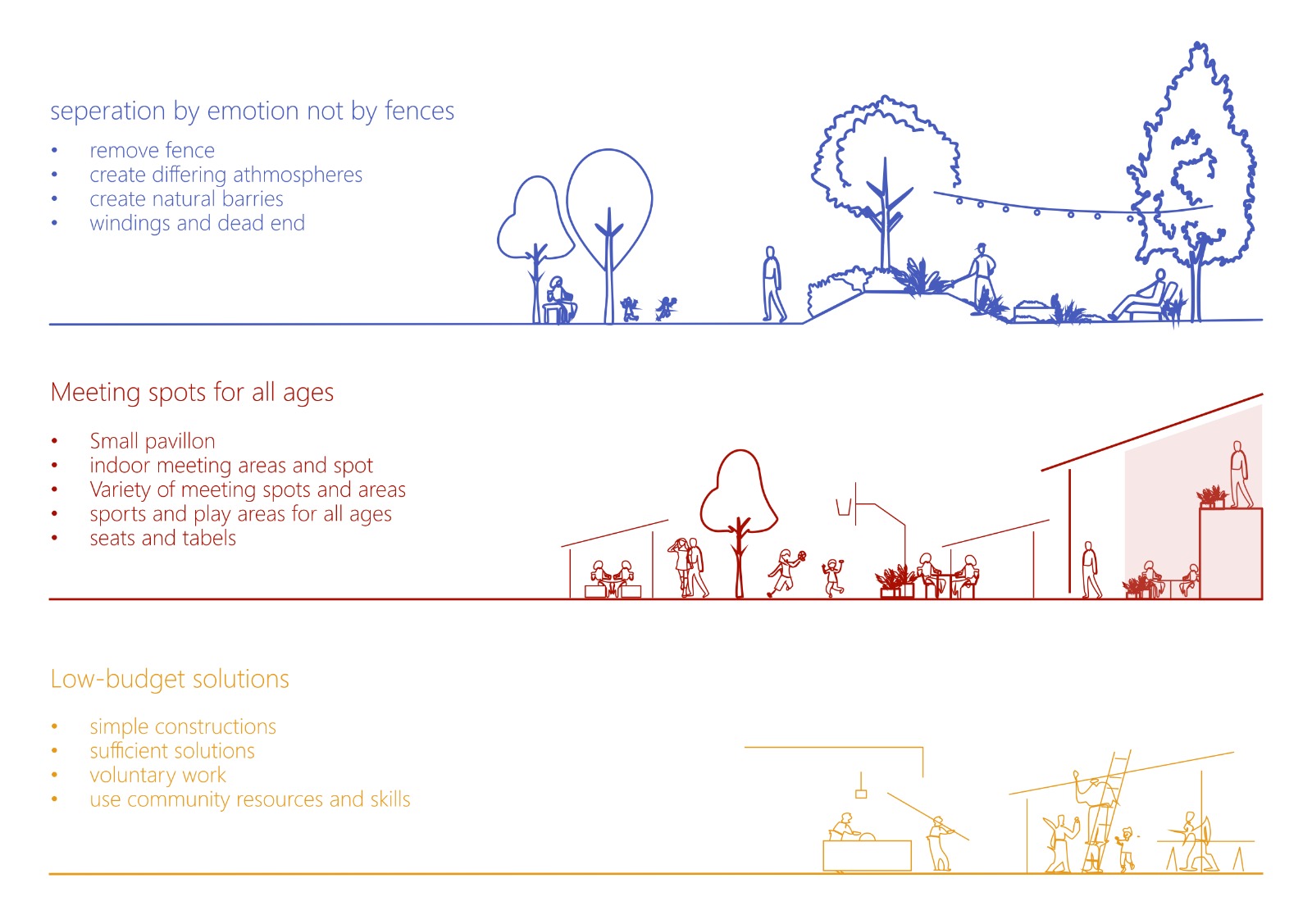
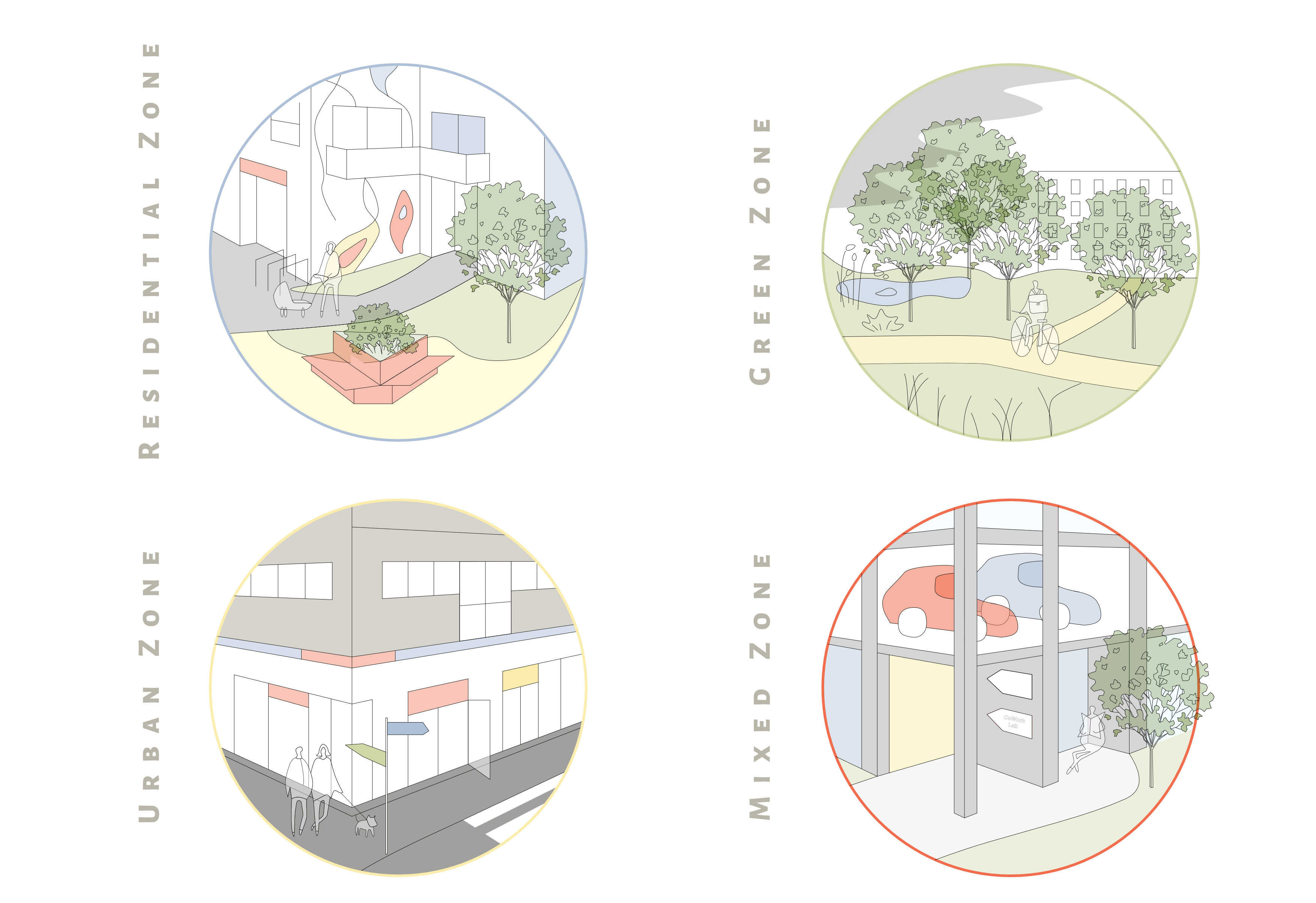
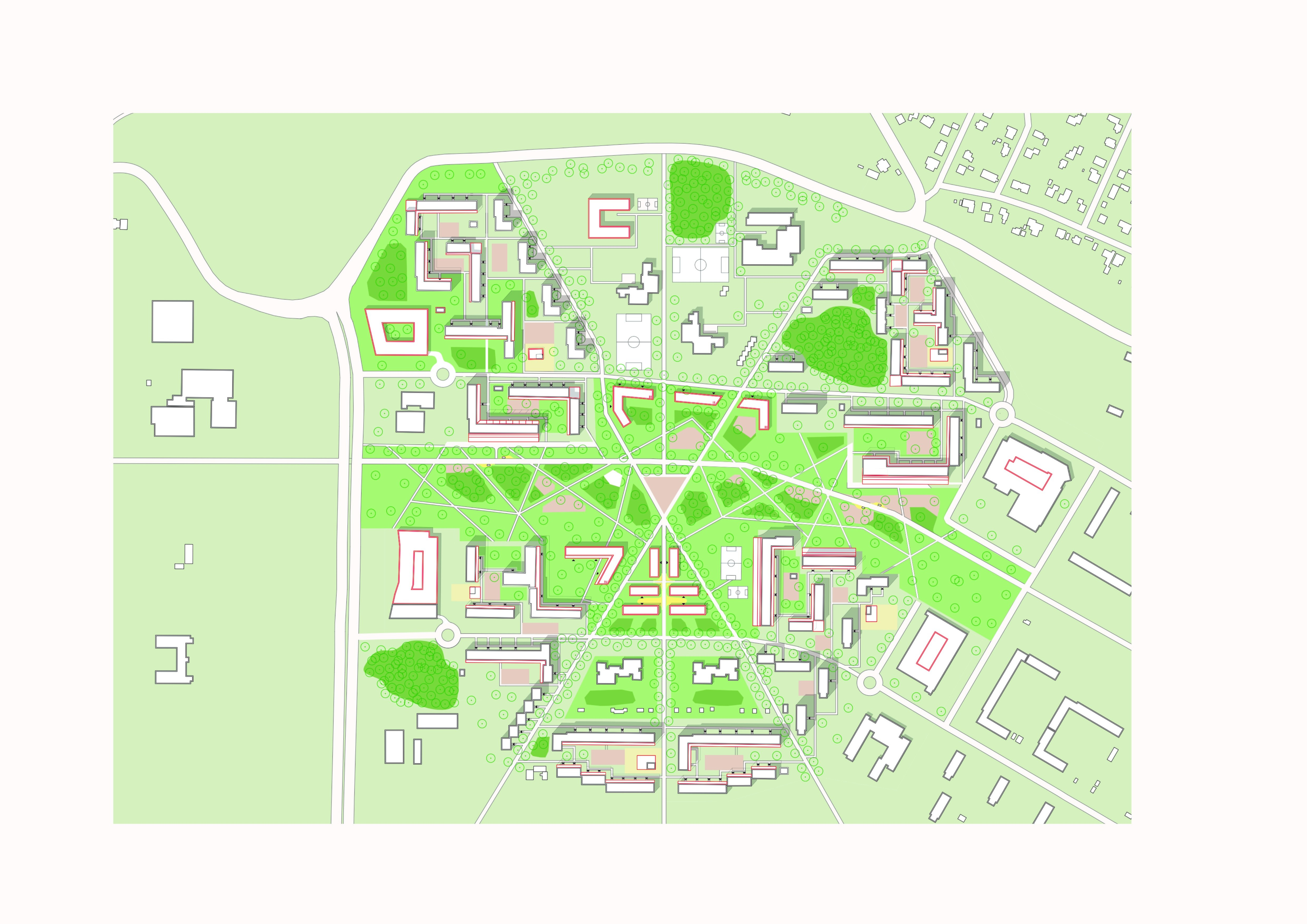
Spatial fragmentation is reduced by bridging Kuristiku to the city and neighbouring districts with new walkways, bike lanes, and a tramline, and by direct internal paths. Fences and scattered parking are removed, relocated to centralized multi-storey facilities, freeing courtyards and central spaces for social and ecological uses. In-between spaces become functional and comfortable through zoning: courtyards are separated by earth mounds, greenery, and new buildings, forming shared gardens. Existing commercial areas are strengthened by opening stores to the street and creating pedestrian-friendly zones. The central marketplace is improved with a community centre and large roofed outdoor area. Parks are divided into calm and active zones, with trees, mounds, and pavilions providing shelter and wind protection.
These pavilions, community centre, sports and playgrounds, and seating areas provide public places to meet. Every house will have a light, open common room on the ground floor with a terrace to the courtyard. Shared workspaces, libraries, and associations open to the public side, activating space and fostering idea exchange, initiatives, and associations, supported by municipal programs.
Transformation relies on self-sufficient change. Communal property generates income for FOAs and associations to maintain buildings and public space. Roofs host solar panels; ground floors owned by FOAs are rented to businesses and associations, generating income through cultural events. Local energy, efficient heating, and insulation reduce residents’ costs, while shared workshops and tool facilities empower small business creation, fostering a mixed-use neighbourhood.
Affordable, low-budget solutions use voluntary work and local skills. Adaptable constructions and existing structures allow gradual development, creating a resilient Kuristiku.