Group 1: Strengthen What’s Existing
Ziwen Yao, Ines Johanna Grimm, Grâce-Raphaëlle Lallier, Dominika, Kateryna
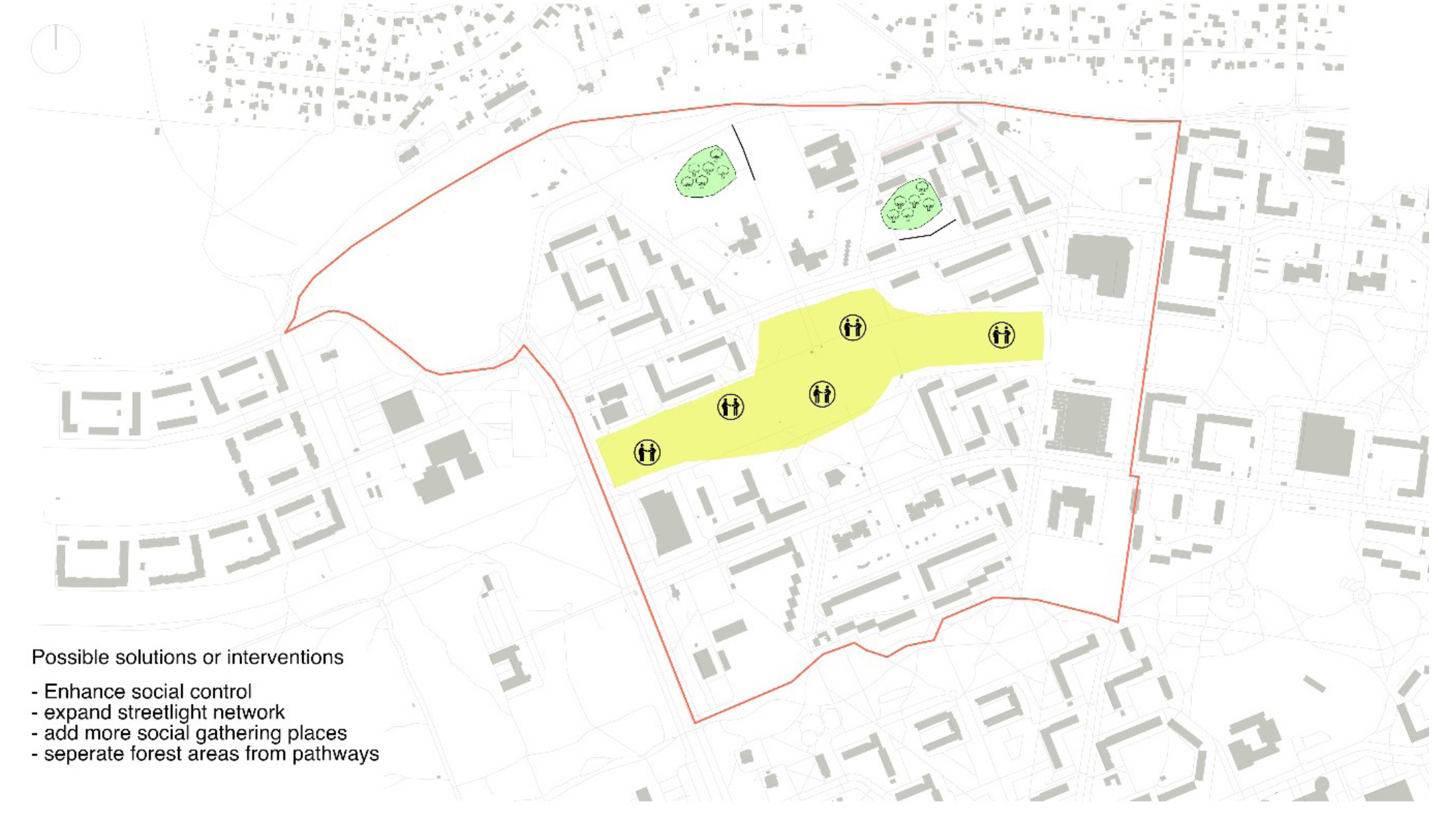
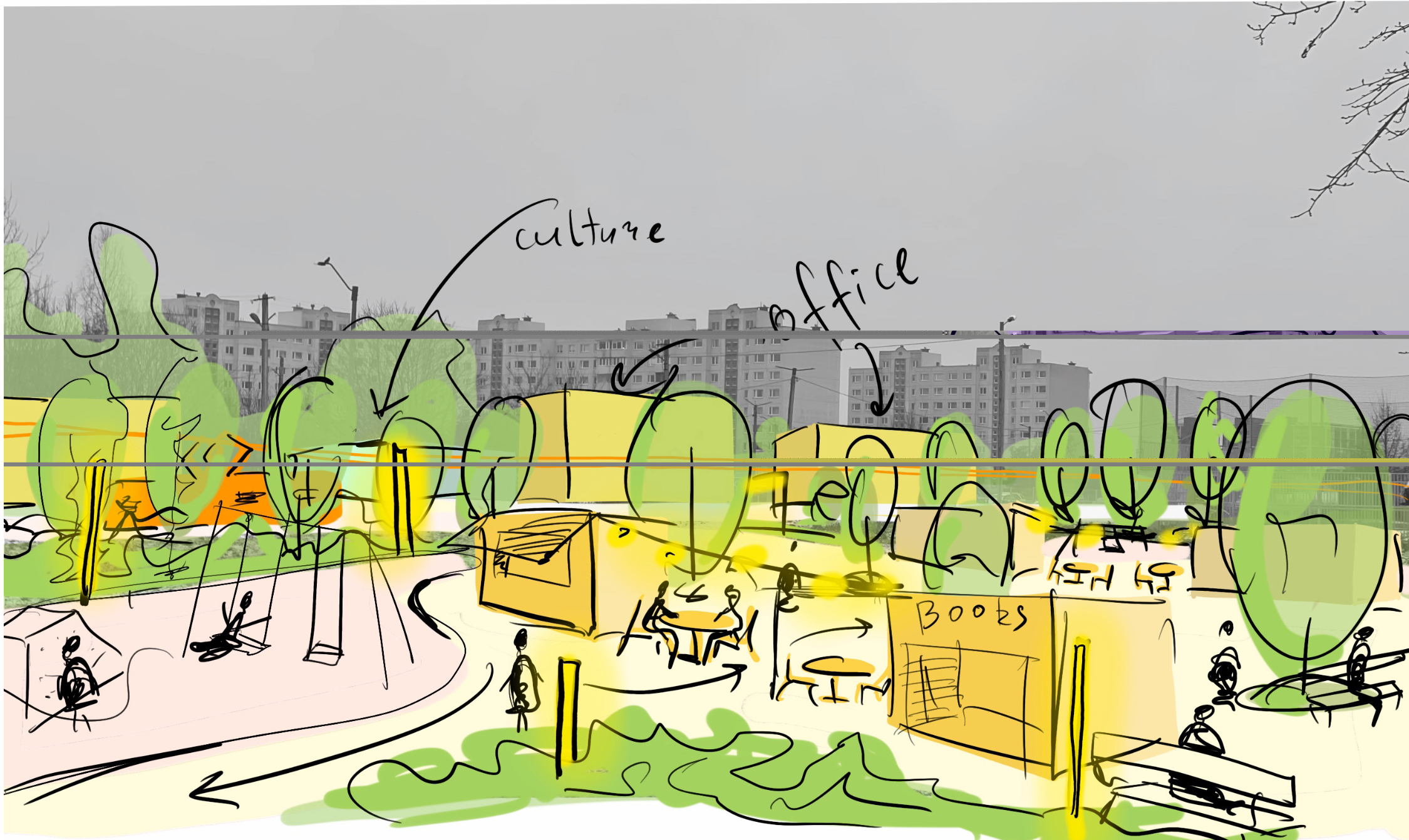
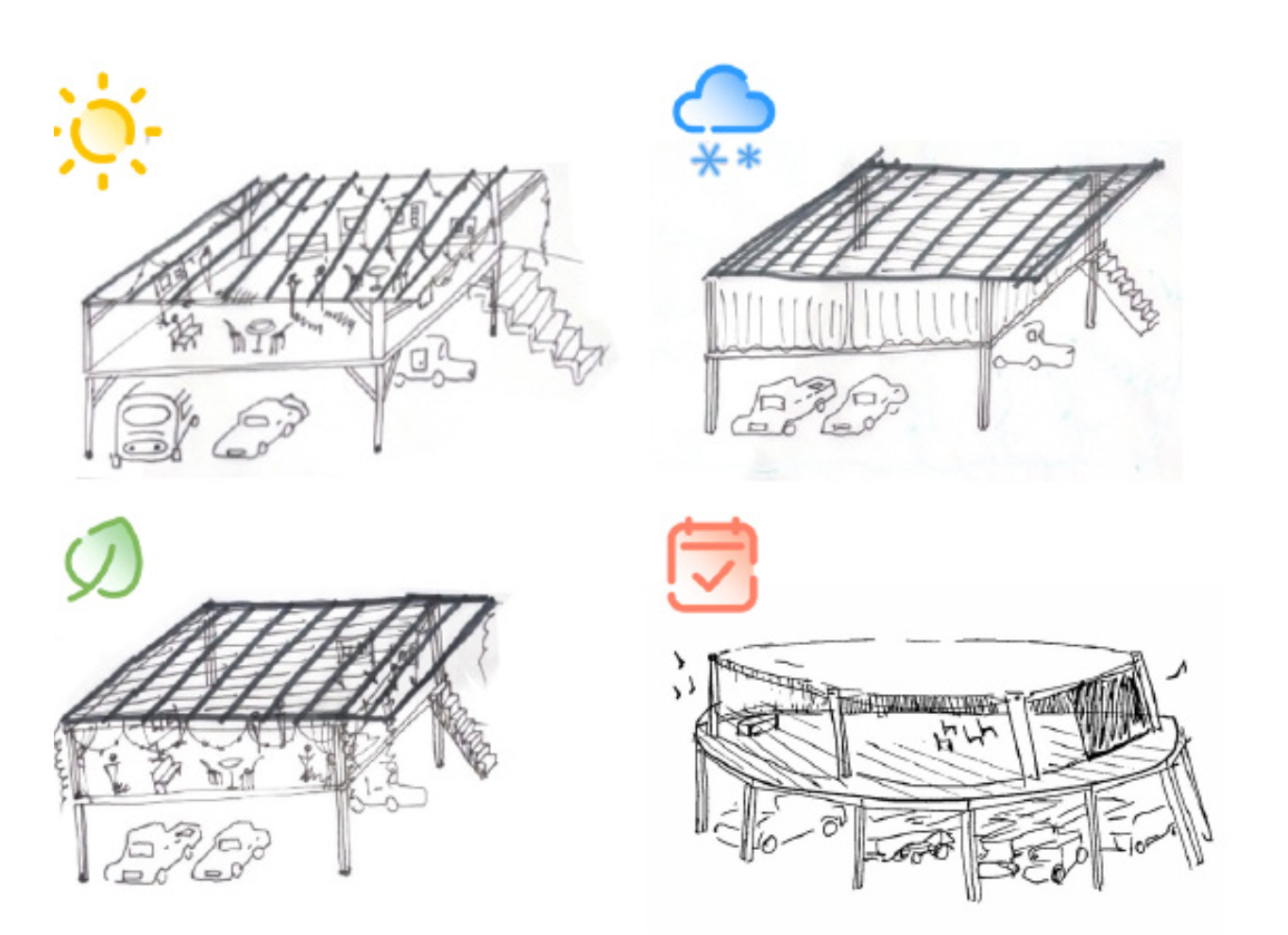
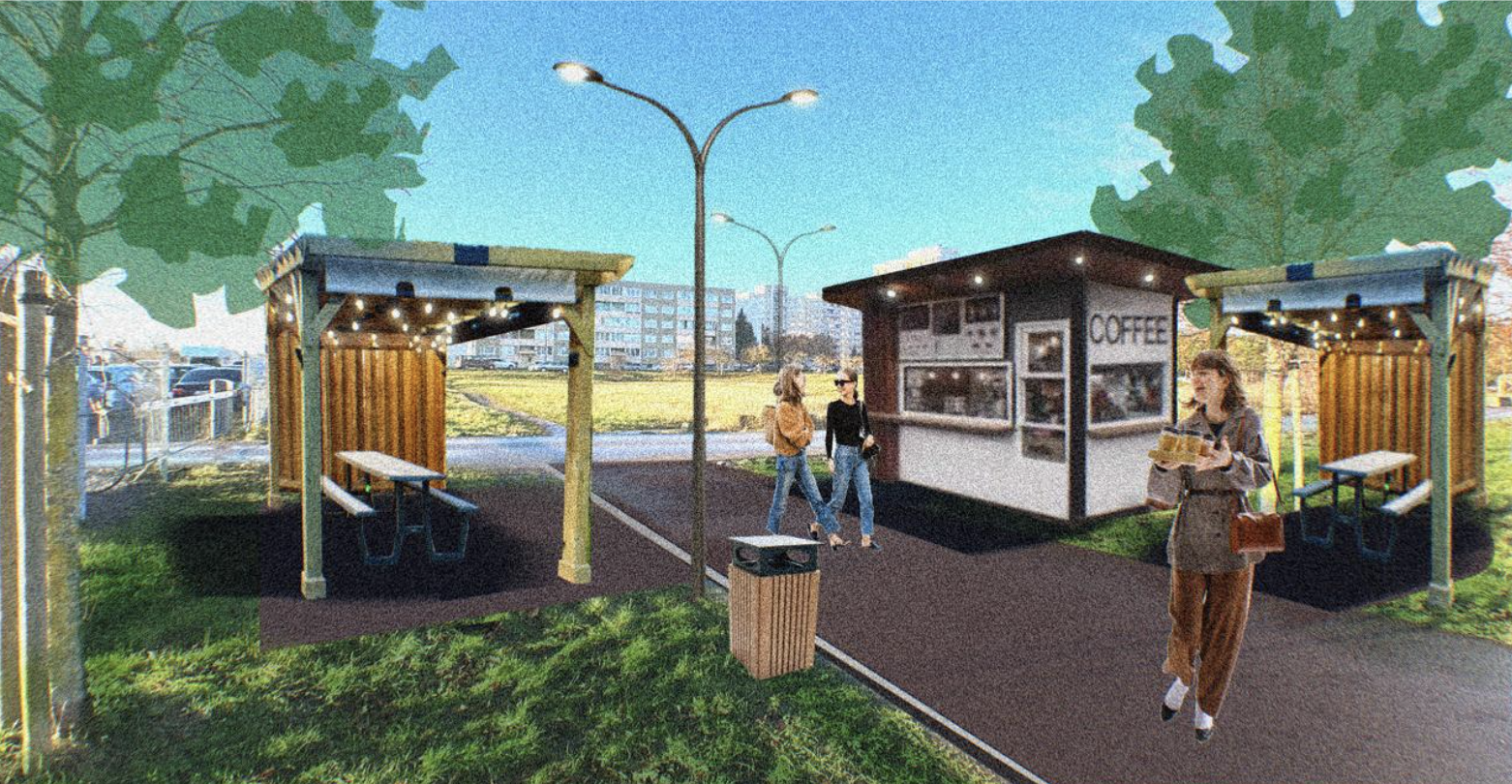
Kuristiku offers a wide range of playgrounds, primary schools, and markets. People gather in these places, creating social spaces that can form the foundation for improvements of social life. The analysis revealed a large green, underused area in the center of the neighborhood, ideal for introducing new social activities and creating new dynamics. The purpose of this proposal is to activate the center of the neighborhood with year-round circular activities. Acting on the current use of this space, particularly the informal paths created by pedestrians, small “kiosks” will be placed along these crossing paths, forming a pattern of new meeting points. Further more the parking lots located in the courtyards between the housing blocks are offering potential for transformation. These spaces could host social activities on a smaller scale, activating their immediate surroundings and creating outward connections with the rest of the neighborhood. To summarize: Even small installations could activate valuable spaces, energize the neighborhood, and increase its attractiveness beyond borders. These new social hubs are meant to remain active throughout the year, offering different activities depending on the season.

Group 2: Seasonal Comfort
Sven Spallek, Polina Chernenko, Fiona Köhler
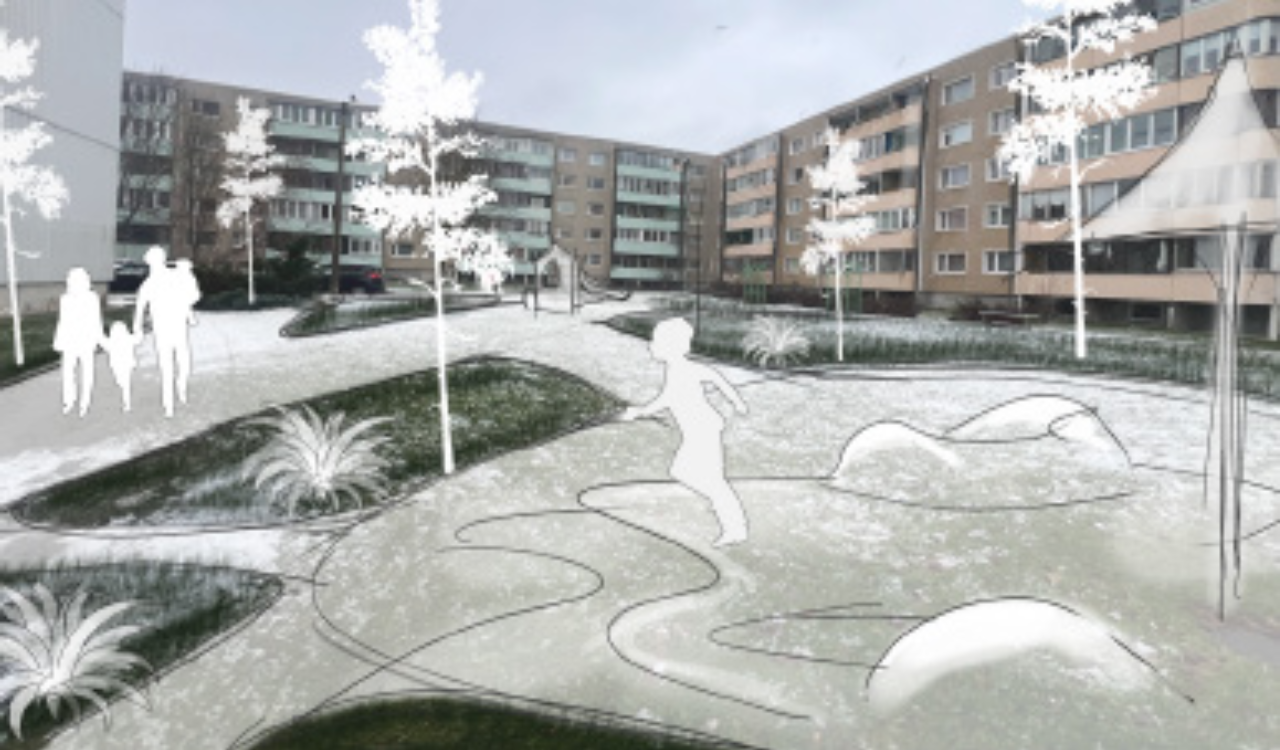
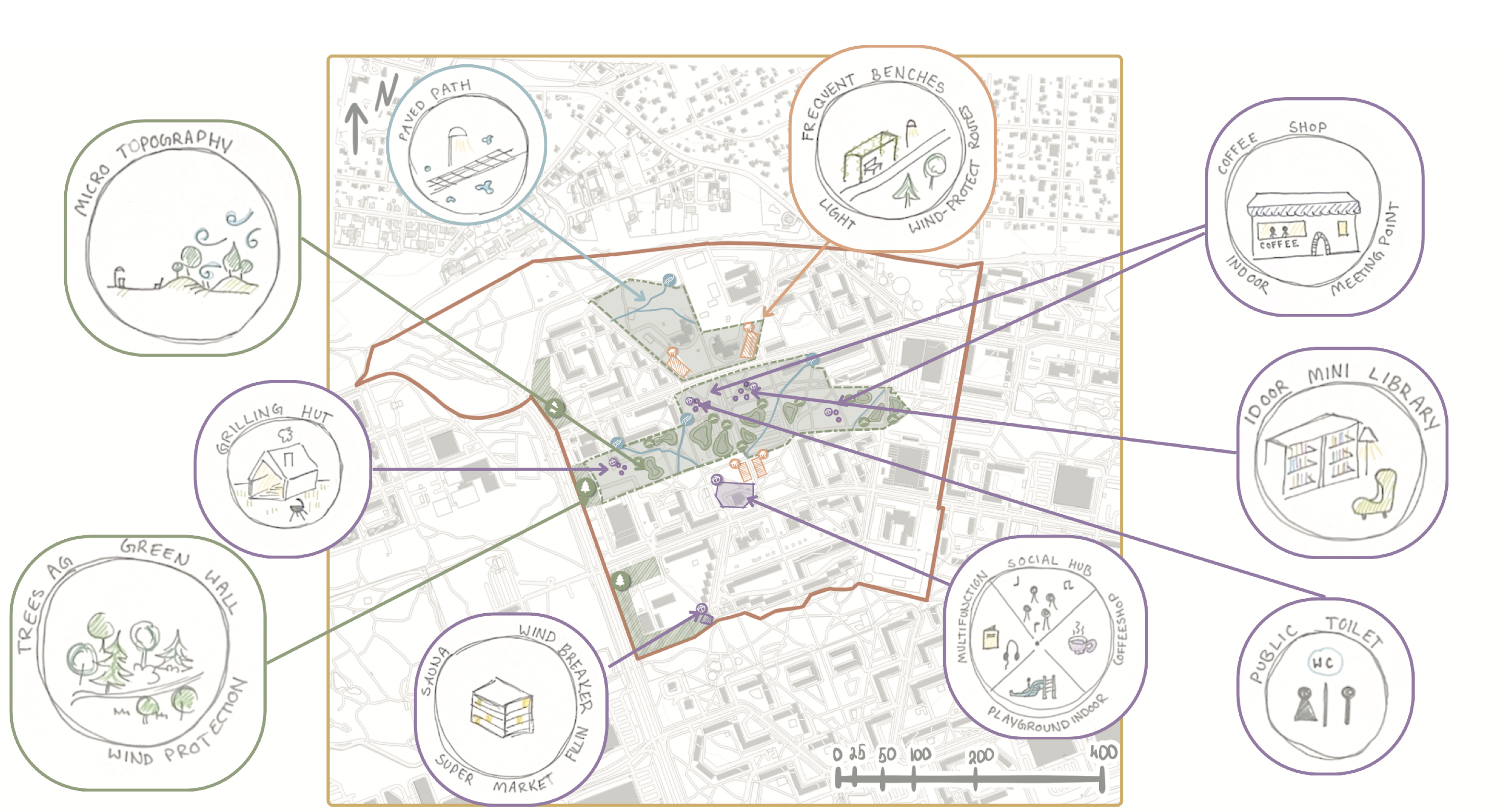
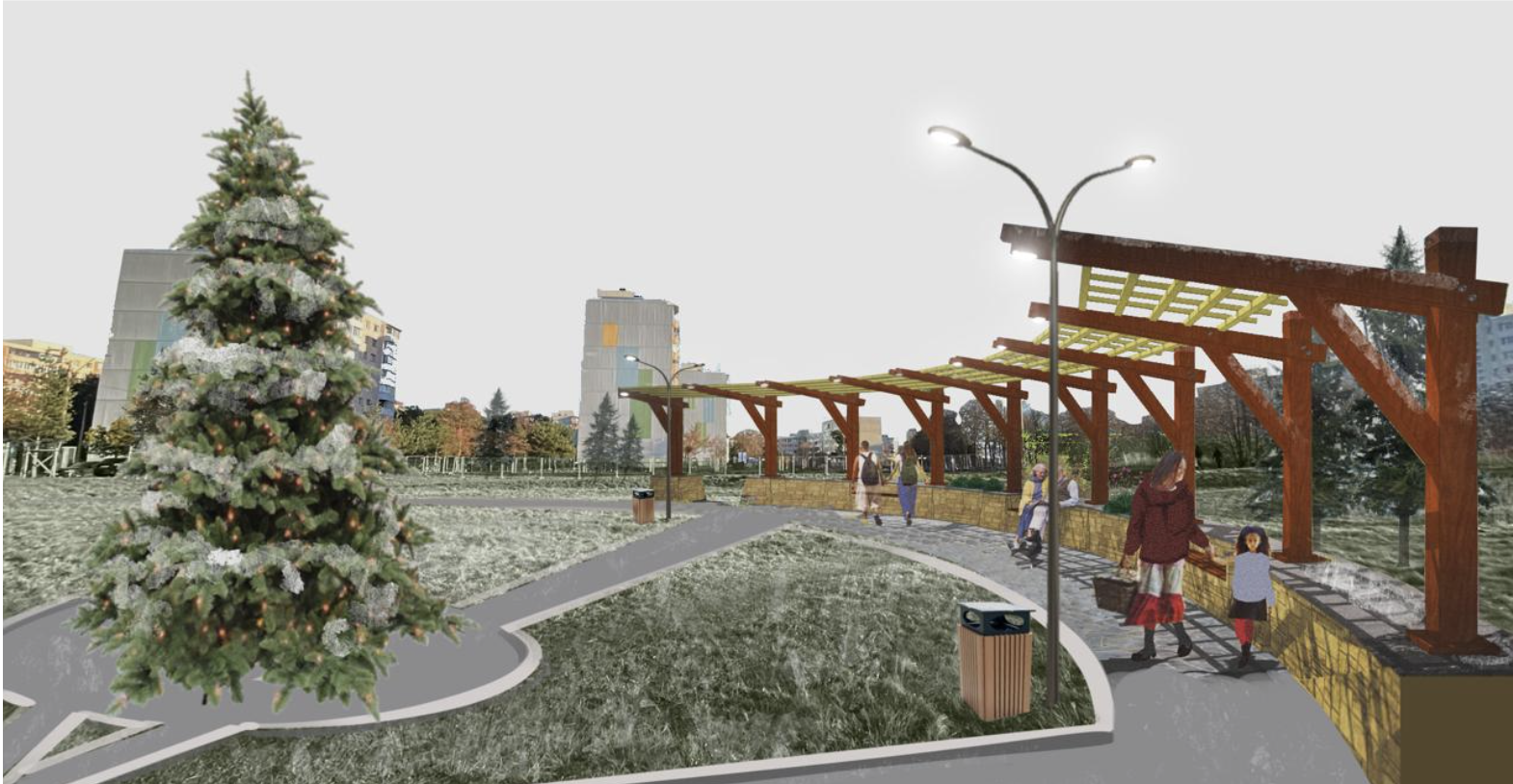
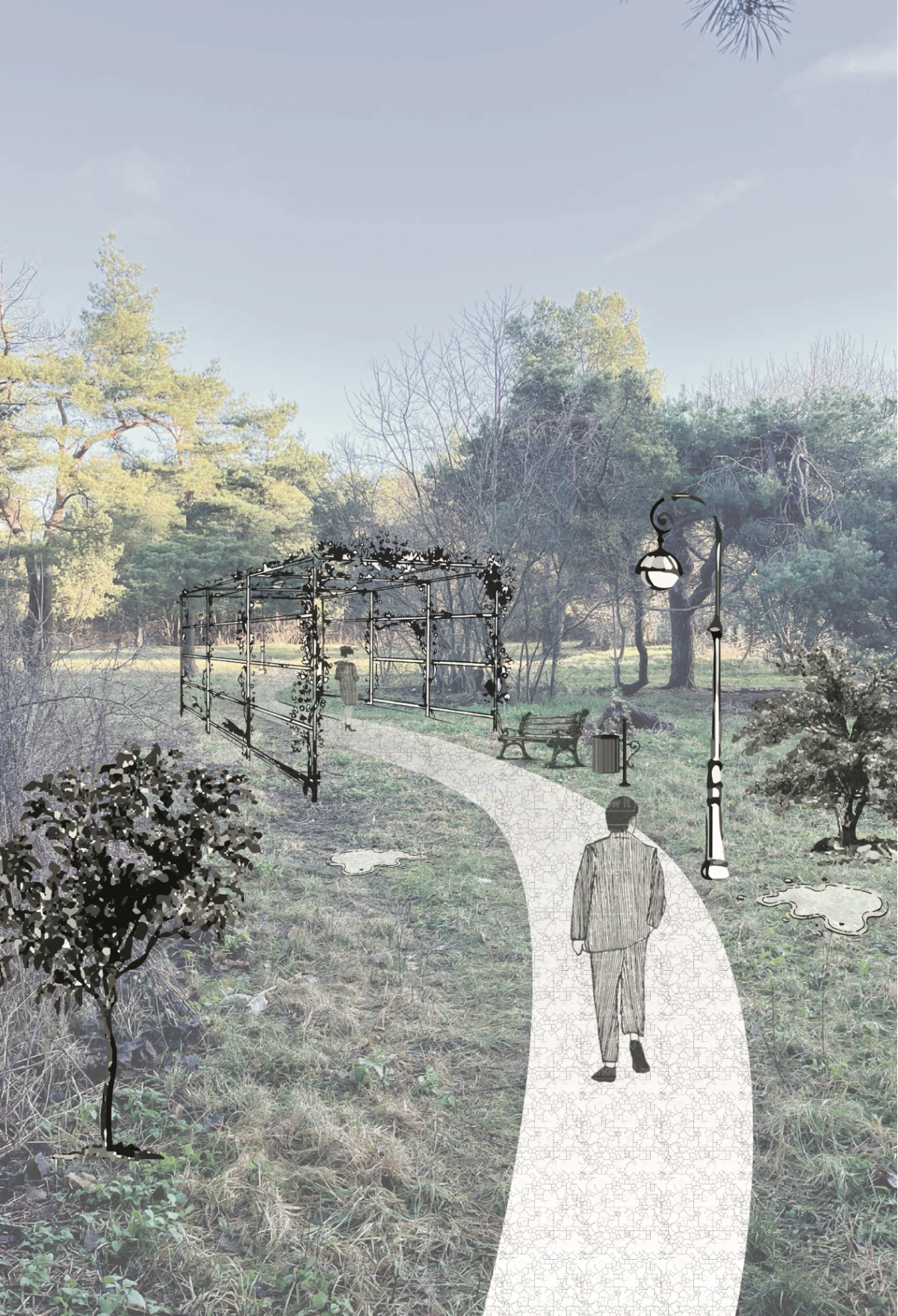
During our excursion to Tallinn, our group explored the topic of seasonal comfort. The first step in our analysis was to conduct field trips to examine the existing infrastructure and identify factors that could cause discomfort for residents. We noticed, for example, that the network of paths was not sufficiently developed and that the most frequently used paths were beaten tracks. These were now icy and very slippery in winter. In addition, the center of the area was characterized by wind chills and strong wind tunnels caused by a permanently icy wind. With the help of the seasonal analysis maps we created, we were able to develop concepts and visualizations that address the existing problems and explain our planned interventions. The planned interventions included, for example, paving the heavily used footpaths, introducing infill typologies to interrupt and redirect wind gusts and planting a “green wall” at the edge of the neighborhood to catch and mitigate strong winds.
Group 3: Ground Floor Usage
Marco Tarrio Torres, Silas Schmidt, Paula Mohrbacher
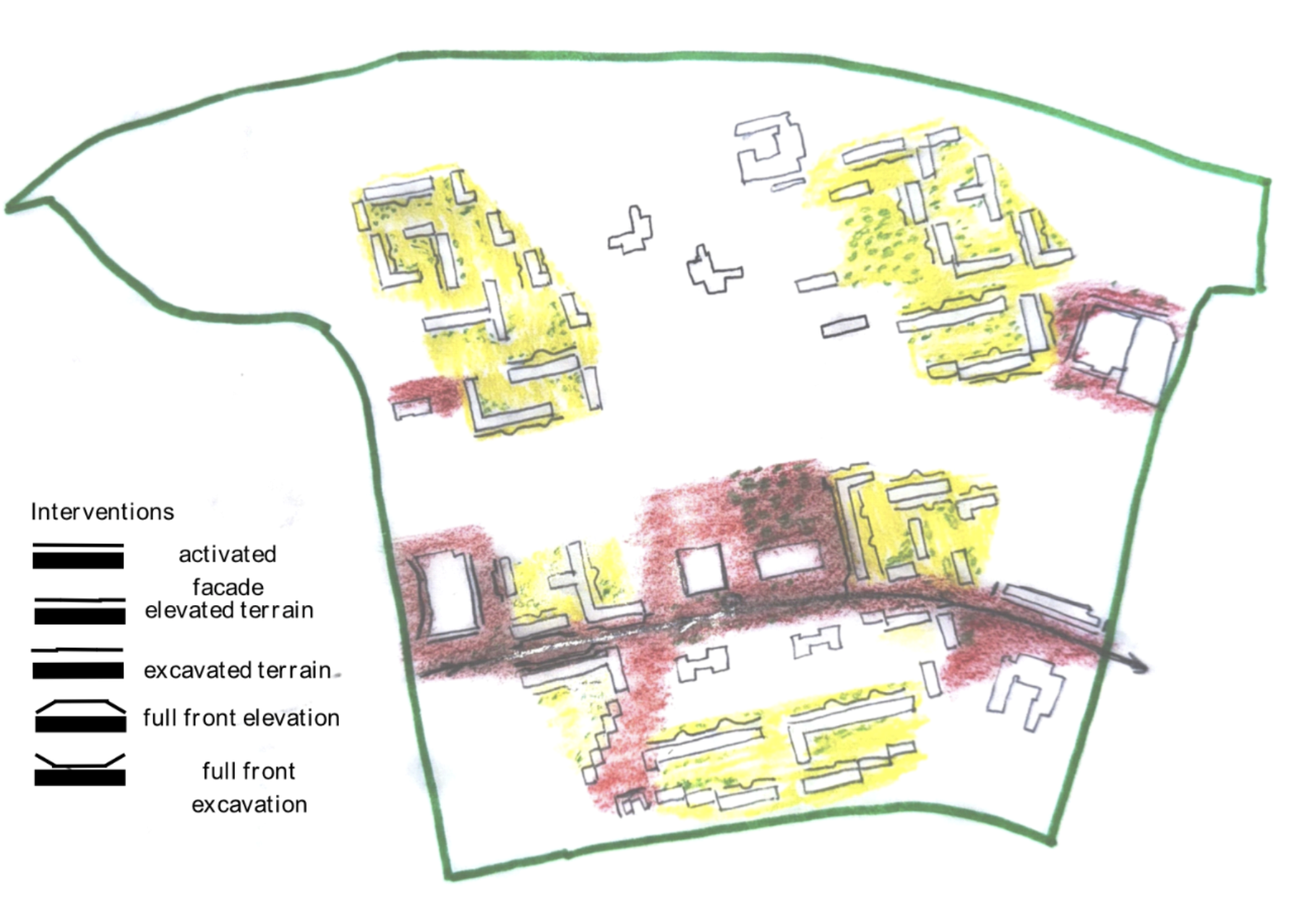
The main routes for pedestrians and public transport meet in the center of Kuristiku where a food court and the main bus stop are located. The larger public facilities, such as supermarkets and a health centre, you find at the western and eastern borders of the district. Some basement shops can be found in the residential buildings. Based on the public facilities and the most frequently used routes, we identified areas with a high and low public frequency. Currently the supermarkets and the mall are introverted typologies, while the surrounding outdoor spaces have low quality. Adjacent to the parking lot of the mall is an abandoned apple garden with potential for development. During Soviet times almost every basement was used as a shop or service space. Today, some of them remain, but they are unattractive, hardly visible and difficult to access. Any basement not used as a shop can be considered vacant and therefore has potential for development. Our goals are to activate ground floors of introverted typologies to make them more accessible, visible and attractive and to address the lack of functions by creating habitant-oriented amenities such as shops, services and communal spaces. We suggest to create highly publicly frequented areas around the centre, the main route and the bigger public facilities and low publicly frequented areas between the residential blocks in the north and south of Kuristiku.

Group 4: Biodiverse Kuristiku
Viktoriia Dukhina, Vladyslava Terekhova, Hannah Weber, Noah Daum, Felix Thomas Galm
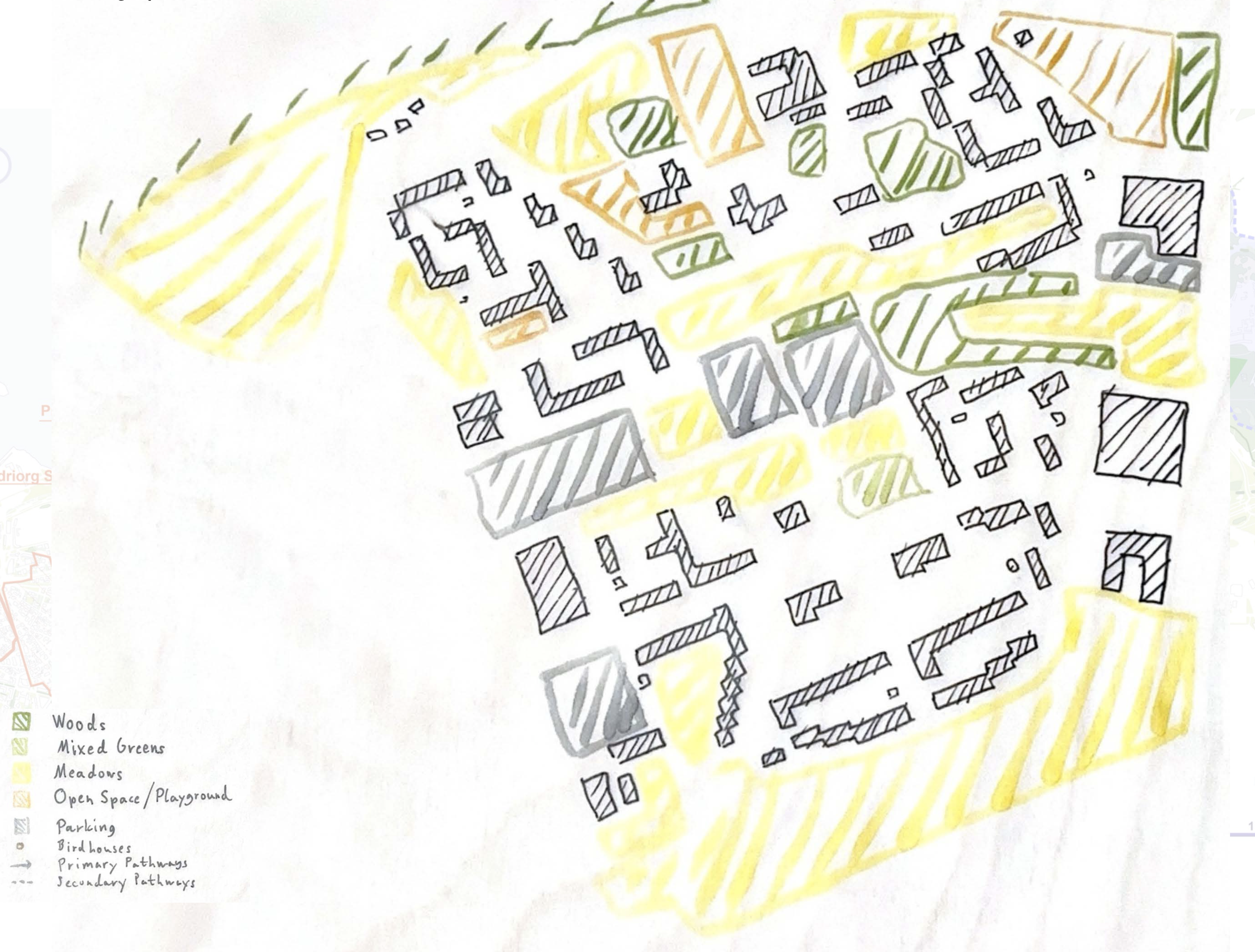
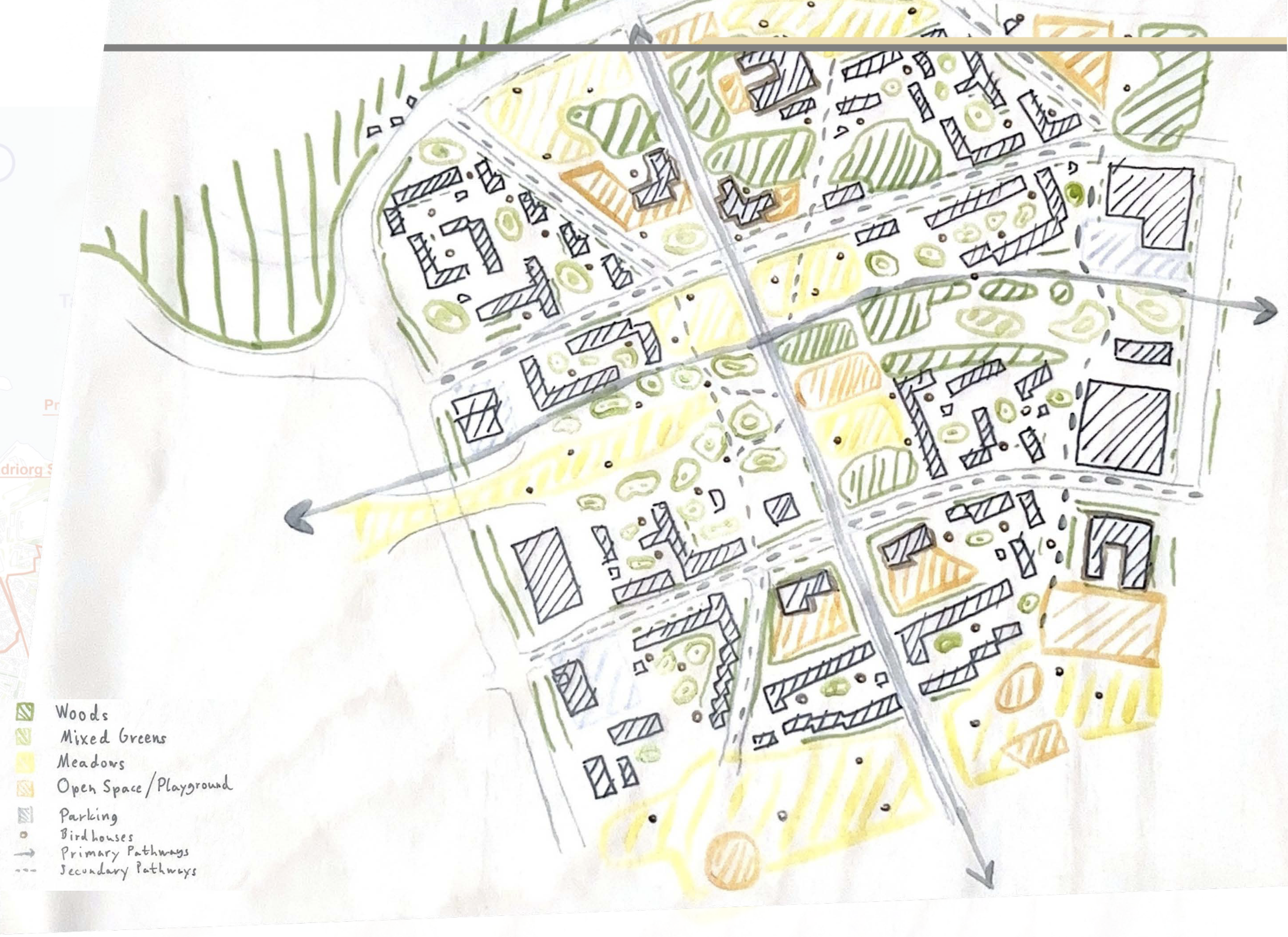
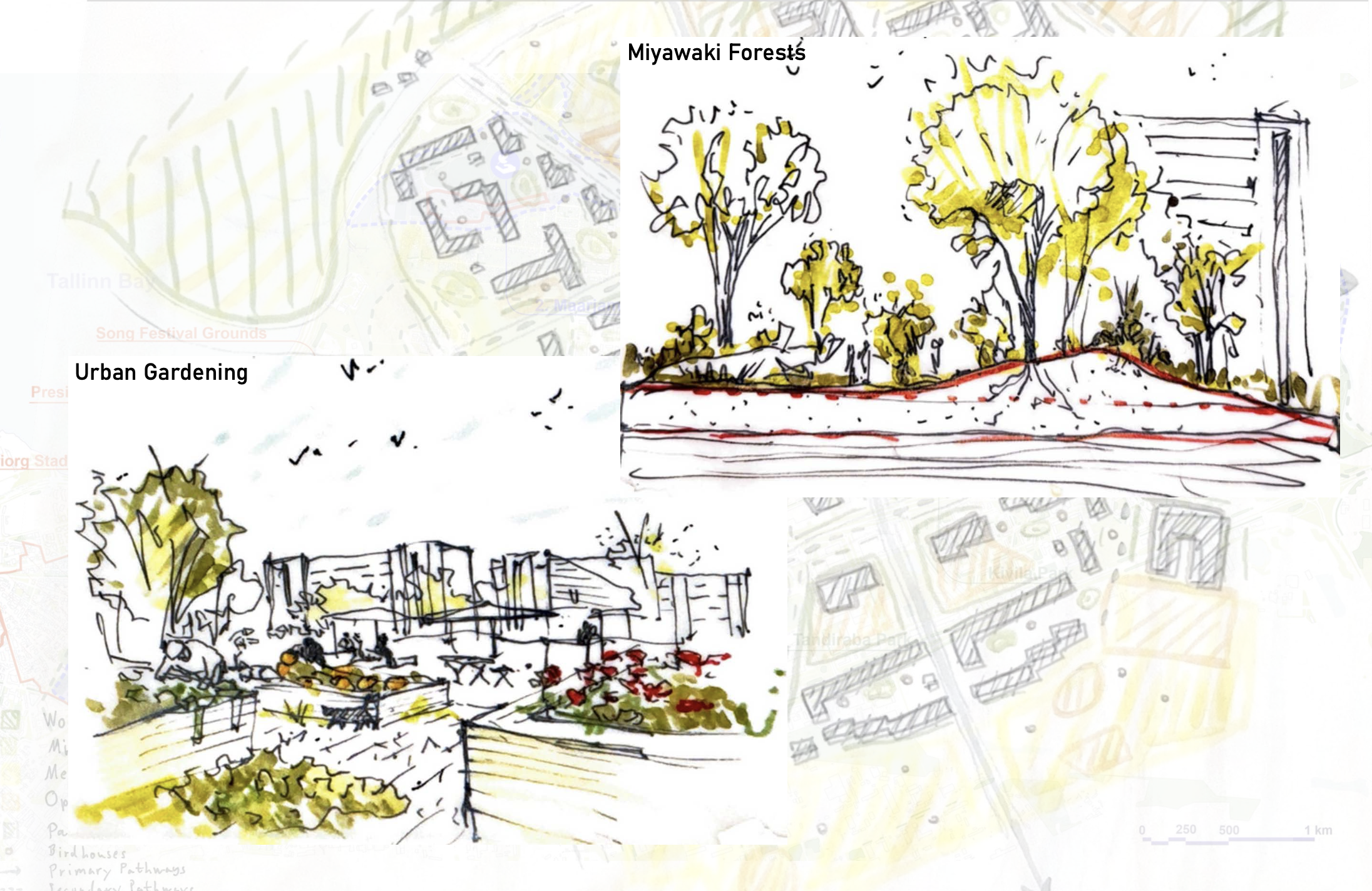
Kuristiku has a lot of different green areas within the district, ranging from grasslands, bushlands to small forests, however, some of the green areas are disrupted by large parking lots, cutting through what would be a green corridor in the middle of the district. The green spaces that are found do not have high quality, which is also related to the missing sense of responsibility of the residents. Our main goals are to connect the green areas not only in the district itself but on a much bigger scale with the surrounding environments and the whole city through the expansion of the pollinator highway. While also improving the diversity of the flora and fauna through the introduction of more diverse habitats and greenery. Central parking spaces should be removed. By introducing small hills all over the district, so that the plants and trees on these hills can grow deeper roots and be more resilient to the challenges that climate change brings. On the west side of the district, we propose an animal crossing so animals can cross over the street. On the north side, we propose a ha-ha ditch combined with a tunnel under the road so smaller critters can cross at that point unhindered. In the middle of the district, a promenade of greenery and social interaction points for the inhabitants is introduced, acting as not only a highway for pollinators but also a cycle path for the residents.
Group 5: Infills and the 15-minute City
Hanna Tilenius, Viktoriia, Luidmyla, Lucas Alexander Zirn, Dominik Vormbruck
Through our analysis of the existing urban fabric in Kuristiku, we discovered that the district already meets many of the fundamental requirements of a 15-minute city. However, there are also several problems. Although Kuristiku has extensive green areas, many of these remain underused, offering little in terms of activity or social gathering opportunities. Our concept aims to fulfill goals of different user groups. A key element of the proposal is the introduction of new infills categorized into three types: S (small), M (medium), and L (large). // S infills are small-scale structures that can be built through community workshopswith minimal funding. These could include pavilions, coffee kiosks, or indoor reading corners. These simple interventions can activate public spaces and foster social interaction. // M infills bring more substantial functions such as offices, bars, restaurants, and sports studios. Their purpose is to revitalize the district center, creating steady activity throughout the day and night and thereby increasing safety through social presence. // The L infill is envisioned as the final puzzle piece: a major cultural center that could house a theater, cinema, or museum, offering the district a cultural meeting space that could extend over barriers of the district. To further enhance the central area, we propose removing surface parking and relocating it into decentralized parking houses built on top of existing shopping malls. This allows the heart of the district to be transformed into a vibrant green space complemented by play areas and smaller gathering spots, many of them shaped by S infills.